Most people meet a white-tail spider indoors at night: on the bathroom wall, in a fold of the towel, or dropping out of a shirt pulled from the floor. Others never see one at all, but wake up with a sore red lump and assume a white-tail did it. The spider has a fearsome reputation in New Zealand, largely for something it does not do.
Here is what is true about white-tails, from how to recognise one to what a bite does, what first aid it needs and how to make your house less attractive to them. If they are turning up often, our page on spider control in Auckland explains how we treat the house.
What does a white-tail spider look like?
A white-tail is a slender, dark grey spider with a long, cigar-shaped abdomen that ends in a pale, cream-white tip. Its legs are banded and its body is 12–17 mm long, with a leg span of a little over 3 cm. Two species live in New Zealand, Lampona cylindrata and Lampona murina, and both came from Australia. They look so alike that telling them apart takes a microscope.
Juvenile white-tails have extra pale patches along the sides of the abdomen, and these fade as the spider grows, so an adult may show only the tip. Males also carry more white markings than females. The shape is the giveaway: long and narrow, not round.
White-tail look-alikes
Several dark spiders get mistaken for white-tails. Vagrant spiders (Uliodon) are bigger, brown to almost black, and hunt on the ground in gardens near bush. The black house spider (Badumna insignis) is stouter, with a rounded abdomen and no white tip, and it sits in a lacy web rather than wandering. The false katipō is round and shiny black. Our NZ spider identification guide covers each of them.
Where white-tails live, and why they come inside
White-tails live under loose bark, in leaf litter and among plants, and they come inside because a house is full of their food. They are specialist hunters of other spiders, particularly the grey house spider (Badumna longinqua) and the black house spider that build webs around windows and eaves. They hunt at night and spend the day tucked into anything dark and folded.
Their hunting method is sly. A white-tail walks onto another spider's web and plucks at the silk the way a trapped insect would struggle. When the owner comes out to investigate, the white-tail attacks. So a house with plenty of webs on it is, from a white-tail's point of view, a well-stocked pantry.
Indoors, they turn up wherever it is dark and undisturbed: in towels, bedding and clothing left on the floor, in shoes, behind curtains, and in garages, sheds and roof spaces. Te Papa's spider expert notes that many seen indoors in late summer and early autumn are likely to be males, which leave shelter when they mature and wander in search of females.
Are white-tail spiders poisonous?
White-tails are venomous, like nearly all spiders, because venom is how they subdue their prey. But their venom is not dangerous to people. Health New Zealand states that white-tail bites are not considered poisonous to humans, and the National Poisons Centre says the venom is not known to cause harm, though it still advises good wound care. The bite hurts, and that is usually the extent of it.
Only two spiders in New Zealand are medically significant: the native katipō and the Australian redback, both widow spiders of the genus Latrodectus. The white-tail is not one of them. As Te Papa's Phil Sirvid puts it, most people bitten will find the experience "annoying and painful but that's about it".
Do white-tail bites cause flesh-eating ulcers?
No. The best evidence says white-tail bites do not cause necrotic, or flesh-eating, ulcers. In a study of 130 bites where the spider was caught and identified by an expert, published in the Medical Journal of Australia in 2003, not one caused a necrotic ulcer or a confirmed infection. Health New Zealand and Te Papa both reflect that finding. Skin that breaks down after a supposed spider bite needs another explanation.
What the study found
Geoffrey Isbister and Michael Gray followed bites reported to Australian poisons centres and emergency departments between 1999 and 2002, and included a case only if the person saw the bite and the spider was caught and identified. There were 79 bites by L. cylindrata and 51 by L. murina. Every person had pain, which was severe in about a quarter of cases. Most had a red mark, fewer than half had itching, and 9% had general effects beyond the bite site. Venom studies point the same way: white-tail venom has little capacity to destroy tissue.
The New Zealand picture matches. Landcare Research notes that a New Zealand Medical Journal review of patients admitted to Christchurch Hospital with suspected white-tail bites between 2001 and 2003 found no evidence that any of them developed the tissue-destroying condition blamed on spiders.
So where did the myth come from?
Mostly from bites that were never confirmed. In the cases that built the white-tail's reputation, nobody caught the spider at the time, and often nobody saw a spider at all. A white-tail found in the house days later got the blame. Any break in the skin can let bacteria in, and a skin infection or another skin condition can look dramatic. Te Papa's view is that infection is a far more likely cause of serious problems than the venom.
Children are not at special risk. The Australian study included 25 people under 15, and Te Papa's spider expert sees no particular reason to worry more about children, although a young child may find the pain harder to bear. The same first aid applies, and the same signs mean a trip to the doctor. Keep an eye on scratching, which is how bites become infected.
That is why the useful rule is simple. If you did not feel a bite and did not see a spider, a spider probably did not cause the wound, and it needs a doctor's diagnosis rather than a label.
What a white-tail bite looks like, day by day
A confirmed white-tail bite hurts straight away, often as a sharp or burning sting, which is why people usually see the spider. Over the next hours the spot turns red, may swell and may itch. In the Australian study the typical bite settled in about a day: some people had pain only, some a red mark that faded within 24 hours, and some a sore or itchy red lump that lasted several days.
- At the moment of the bite: sharp, immediate pain, sometimes with two tiny puncture marks visible.
- The first few hours: redness, a burning feeling, some swelling and itch around the spot.
- The next day: for many people, the pain has gone and the redness is fading.
- A few days on: in a minority, a raised, red, itchy or tender lump that settles gradually, usually within a week.
Health New Zealand says the symptoms go away with no lasting effects. A bite that is getting steadily worse after the first day, rather than better, is the signal to have it looked at.
First aid, and when to see a doctor
A white-tail bite needs only simple first aid. Wash the bite with antiseptic or warm soapy water, then hold ice wrapped in a cloth against it to ease the pain and swelling, never ice directly on the skin. A pharmacist can suggest something for pain or itch. For advice, call the National Poisons Centre on 0800 764 766, or Healthline, the 24-hour health advice line, on 0800 611 116.
Health New Zealand advises contacting your doctor or healthcare provider if the bite area:
- becomes very red, or the redness is spreading
- is very painful
- blisters
- looks infected: hot, swollen, weeping, or with pus
- forms an ulcer
Also see a doctor if you develop a fever or feel generally unwell, or if the bite is not improving after a few days. Call 111 for any sign of a severe allergic reaction, such as swelling of the face, lips or throat, or difficulty breathing.
If you can do it safely, catch the spider in a jar. An identified spider takes the guesswork out of the diagnosis, and it is the one thing the white-tail myth has always been missing.
What's often mistaken for a spider bite
Many sores blamed on spiders turn out to be something else. Bites from other insects are the most common: fleas, mosquitoes and sandflies all leave itchy red spots. Bacterial skin infections, such as an infected hair follicle or cellulitis, can begin as a small red lump and grow. Some skin conditions blister or ulcerate on their own. None of these needs a spider, and several need treatment.
Where and when the bites appear is a useful clue. Several itchy bites around the ankles point to fleas. Lines or clusters of bites on the arms, shoulders and neck after a night's sleep suggest bed bug bites. A single painful bite you felt, with a spider found straight away, is the pattern of a genuine spider bite.
How to get rid of white-tail spiders
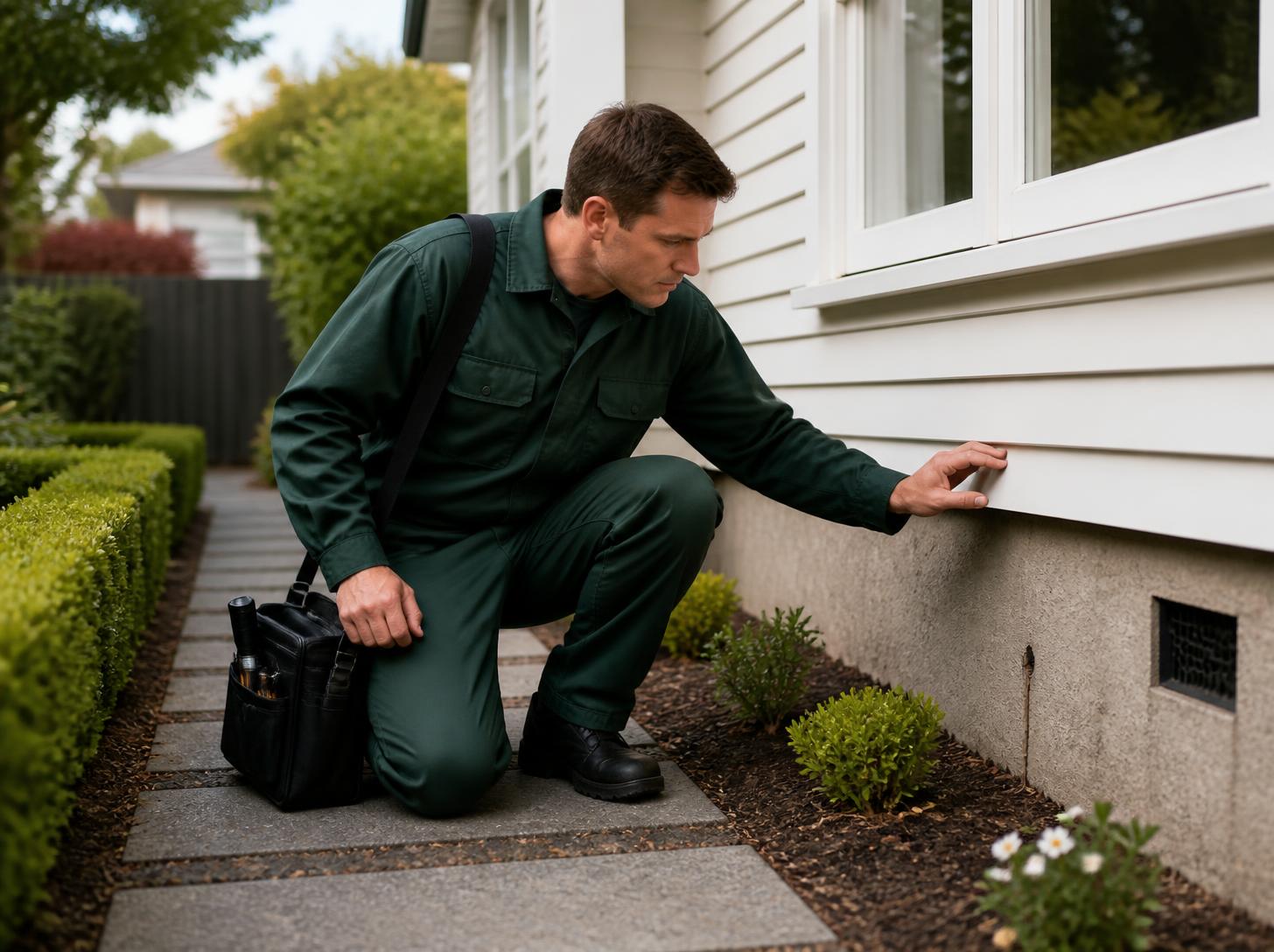
The most effective way to get rid of white-tails is to reduce the spiders they eat. Clearing webs and treating the outside of the house for grey and black house spiders removes their food supply. Then make the house less comfortable: keep clothes, towels and shoes off the floor, shake out anything left outside, and seal gaps around doors, windows and the roofline.
Cut off the food supply
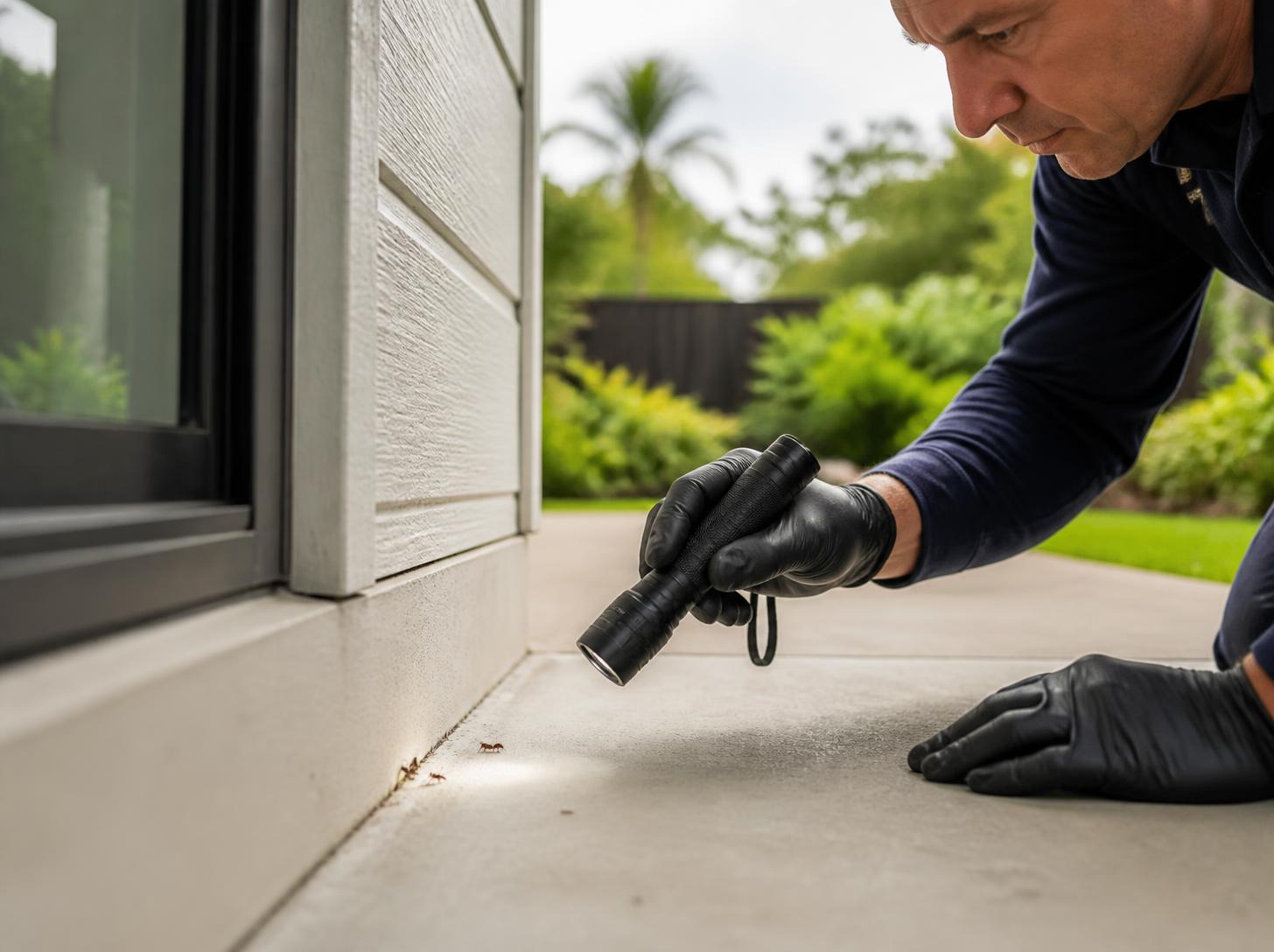
Brush down webs around windows, eaves, fences and the garage, and treat those surfaces with a residual spray so the house spiders do not rebuild. Fewer house spiders means fewer white-tails coming to hunt them.
Take away the hiding places
Pick clothes and towels up off the floor, keep shoes on a rack, shake out gardening gloves and boots before use, and keep beds a little away from walls, with bedding off the floor.
Close the doors
Seal gaps under doors and around window frames, repair torn fly screens, and look at where pipes and cables enter the house.
Check the garage and shed
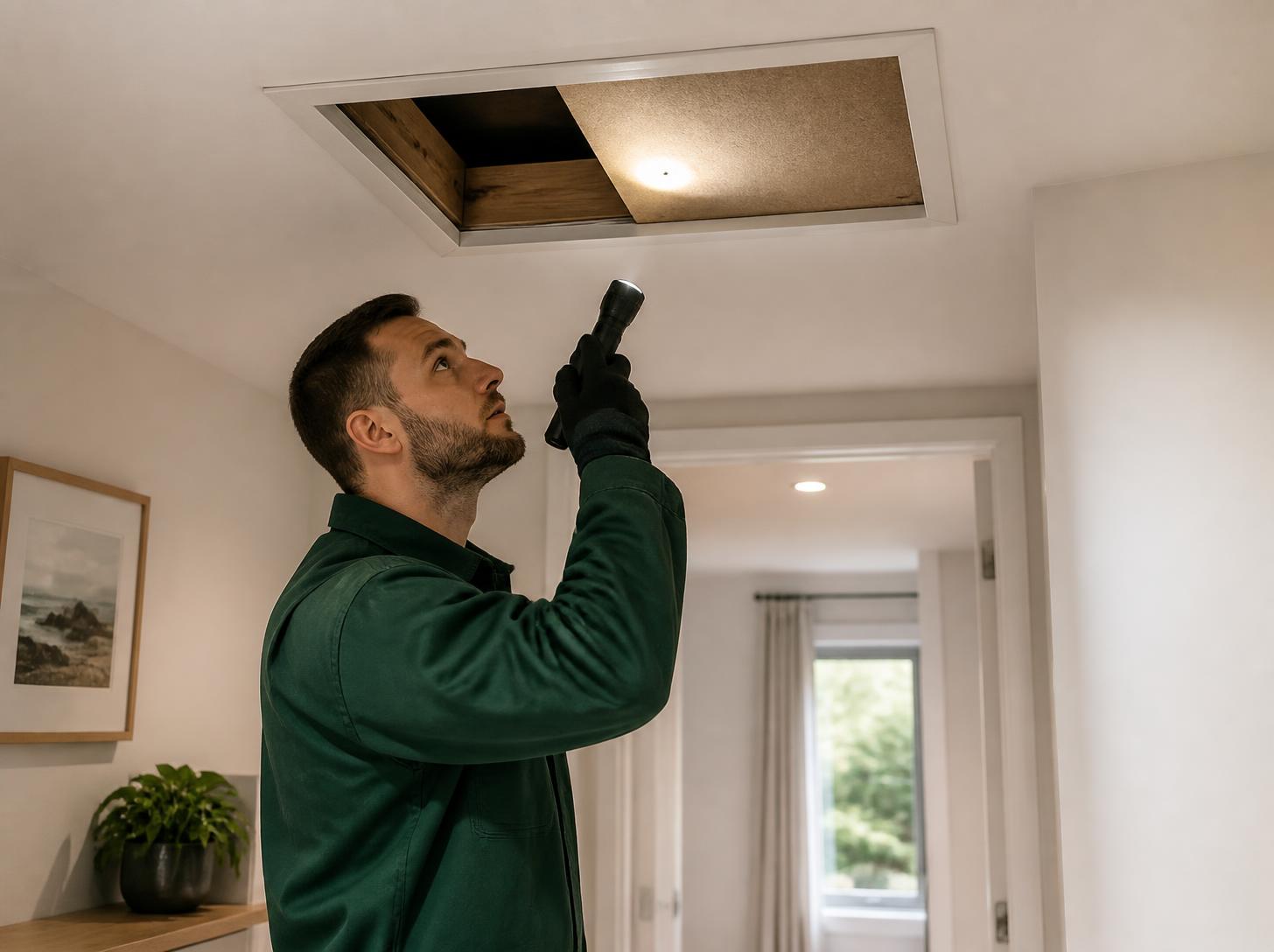
White-tails often shelter in garage ceilings, sheds and roof spaces. Clearing clutter and webs there removes a reservoir that keeps supplying the house.
A residual spray works best when it is timed well. Our guide to the best time to spray for spiders covers the season, the weather and which products are worth using. If white-tails keep turning up indoors, particularly in a bush-edge or older house, professional spider treatment of the exterior, the garage and the roof void entry points deals with both the white-tails and the house spiders they live on.
Call 09 925 0448 or request an estimate online. Tell us where you are finding them and how often.
Frequently asked questions
Are white-tail spiders native to New Zealand?
No. Both species came from Australia. Lampona murina has been in the North Island for well over a century, and Landcare Research records the first specimen at Waiwera, north of Auckland, in 1886. Lampona cylindrata was known from only a few records around Nelson until about 1980, and has since spread through the South Island. In both islands they are now closely tied to towns and houses.
Can a white-tail spider kill you?
There is no evidence that it can. Health New Zealand does not consider the bite poisonous to humans, and in the study of 130 confirmed bites most effects were local and faded within about a day. As with a bee sting, a rare person could have an allergic reaction. Swelling of the face or throat or difficulty breathing is an emergency: call 111.
Do white-tail spiders make webs?
Not to catch food. A white-tail is a wandering hunter that walks into other spiders' webs and plucks the silk like a trapped insect, then attacks the owner when it comes to investigate. It does spin silk for shelter and for its eggs, which is why you may find a loose, tangled retreat in a garage ceiling, a shed or a dark corner of the roof space.
Why do I find white-tails in the bathroom or in my bed?
Because they hunt at night and hide from the light by day, and a house is full of dark folds to hide in. Towels, bedding, clothes left on the floor and shoes are all ideal. The Australian bite study found most bites happened indoors, overnight, when someone rolled onto or pulled on a spider hiding in bedclothes, a towel or a piece of clothing.
What eats white-tail spiders?
Other predators of spiders. Te Papa's spider expert has watched daddy long-legs spiders catch and eat white-tails, and birds and spider-hunting wasps prey on spiders in the garden. None of them will clear a house of white-tails, though. Reducing the grey and black house spiders the white-tails feed on is what makes a house less attractive to them.
Should I kill a white-tail spider?
That is your call. It is not dangerous to handle it with a jar and a sheet of card and let it go outside, well away from the house, and it is just as effective as squashing it. Do not pick one up with bare hands, since it will bite if squeezed. If you find several indoors, the house spiders it feeds on are the thing to deal with.
- Health New Zealand — Treating spider bites
- Te Papa — White-tailed spiders
- Te Papa blog — The biting truth about white-tailed spiders
- Te Papa blog — White-tailed spiders: your questions answered
- Isbister GK, Gray MR. White-tail spider bite: a prospective study of 130 definite bites by Lampona species. Med J Aust 2003;179(4):199–202 (PubMed)
- Medical Journal of Australia — full text of the 2003 study
- Manaaki Whenua Landcare Research — White-tailed spiders
- National Poisons Centre — Spiders in New Zealand
- HealthEd — Spiders in New Zealand