You have itchy bites around your ankles. You do not own a cat or a dog. You have concluded it must be something else — bed bugs, mites, an allergy.
It is usually fleas, and there are only a handful of explanations. Most of them are straightforward once you know what to look for, and knowing which one applies makes treating a house for fleas far simpler.
Flea bites on humans: what they look like and how to treat them
Flea bites on people are small, intensely itchy red spots, usually on the ankles and lower legs, often in clusters or short lines of two or three. They can also appear around the waistband. Most settle on their own within a few days. The bites are a nuisance rather than a danger for most people, but they tell you there is a flea population somewhere at floor level, and that is the part that needs dealing with.
How do you tell if a bite is from a flea?
Flea bites have a fairly distinctive signature:
- Location: Ankles and lower legs, overwhelmingly. Fleas live at floor level and jump upward. DermNet NZ also notes the waistband, where clothing leaves a gap.
- Appearance: Small red spots, often with a darker centre, intensely itchy
- Pattern: Clustered, or in short lines of two or three — sometimes called "breakfast, lunch and dinner"
- Timing: Often worse after sitting still, first thing when you walk across a particular room, or after time on a particular sofa
Compare that with bed bug bites, which are typically on arms, shoulders, neck and torso — the parts exposed while sleeping — rather than at ankle height.
The white sock test is a reliable confirmation. Put on long white socks, walk slowly around the suspect area for a few minutes, then check them. Fleas jump onto them and are easy to see against white. If you get several in a couple of minutes, you have a substantial population.
What clears up flea bites fast?
Not scratching them, which is harder than it sounds. Scratching is what makes bites last longer and can let bacteria in. For the itch, a pharmacist can recommend an antihistamine or a soothing anti-itch cream; DermNet NZ lists both among the usual treatments. Health New Zealand notes that flea bites usually go away on their own after a few days, and advises seeing your healthcare provider if a rash develops around them.
How harmful are flea bites to humans?
For most people, not very. The main problems are the itch and infection from scratching. Some people react more strongly to flea saliva and get larger, longer-lasting lumps, a reaction DermNet NZ calls papular urticaria. Fleas can carry diseases, but Health New Zealand describes them as mostly a public health nuisance. See a GP if bites become hot, swollen, weeping or crusted, or if you feel unwell.
What stops fleas biting humans?
Removing the fleas. Long socks tucked into trousers cut down bites for a day or two, but the population at floor level keeps producing new adults. Vacuum daily, wash bedding hot and treat the house, including the subfloor if an animal has been under it. The bites stop when the adults stop emerging.
The reason it happens: 95% of the infestation isn't on an animal
This is the fact that explains everything else.
Adult fleas you can see are roughly 5% of what is present. The rest exists as eggs, larvae and pupae distributed through carpet pile, floor cracks, gaps along skirting boards, upholstery, pet bedding if there ever was any, and subfloor material. That is why a flea infestation feels impossible to pin down: the bites are on your skin, but the problem is in the floor.
The flea life cycle runs egg → larva → pupa → adult. Eggs fall off the host into the environment. Flea larvae feed on organic debris deep in carpet pile, under sofa cushions and in floor cracks. Heat and humidity speed every stage up, which is why flea problems build over the warmer months, and larvae do poorly in a dry house. Then they pupate — and this is the crucial stage.
Flea pupae are the reason a pet-free house gets fleas. The pupa is wrapped in a sticky protective cocoon that most insecticides cannot penetrate. In that state it can remain dormant for several months waiting for a host. It emerges in response to vibration, warmth and carbon dioxide — the signals that something warm-blooded is walking past. Which is exactly what you did when you moved in.
The species involved is almost always the cat flea (Ctenocephalides felis) — which, despite the name, is also the flea found on the great majority of dogs in New Zealand.
The five explanations
1. Previous occupants had animals
By far the most common. The property had a cat or dog, flea pupae were left dormant in the carpet, and the house then sat empty for weeks or months. You move in, walk around, and hundreds of pupae get the signal to hatch at once.
Classic timing: bites starting three to fourteen days after moving in. If that matches your situation, this is almost certainly it. In a rental, it also matters for who pays — see who pays for pest control in a NZ rental, because an infestation present at the start of a tenancy is generally the landlord's responsibility.
2. Rodents in the subfloor or roof space
Rats and mice carry fleas. If you have a rodent problem — and you may not have noticed one — fleas can move down from the roof space or up from the subfloor into living areas.
There is a particular pattern worth knowing: a flea outbreak that begins shortly after a rodent problem is dealt with. The fleas lose their host and go looking for another one. If you have recently had rodents treated and now have fleas, that is almost certainly the connection. Both problems need addressing, or it repeats — see rodent control.
3. A stray cat, hedgehog or other wildlife under the house
Very common in Auckland's older housing with open subfloors — Mount Eden, Devonport, Papatoetoe. A neighbourhood cat or a hedgehog shelters under the floor, drops flea eggs, and the population establishes in the subfloor before working its way up through floor penetrations.
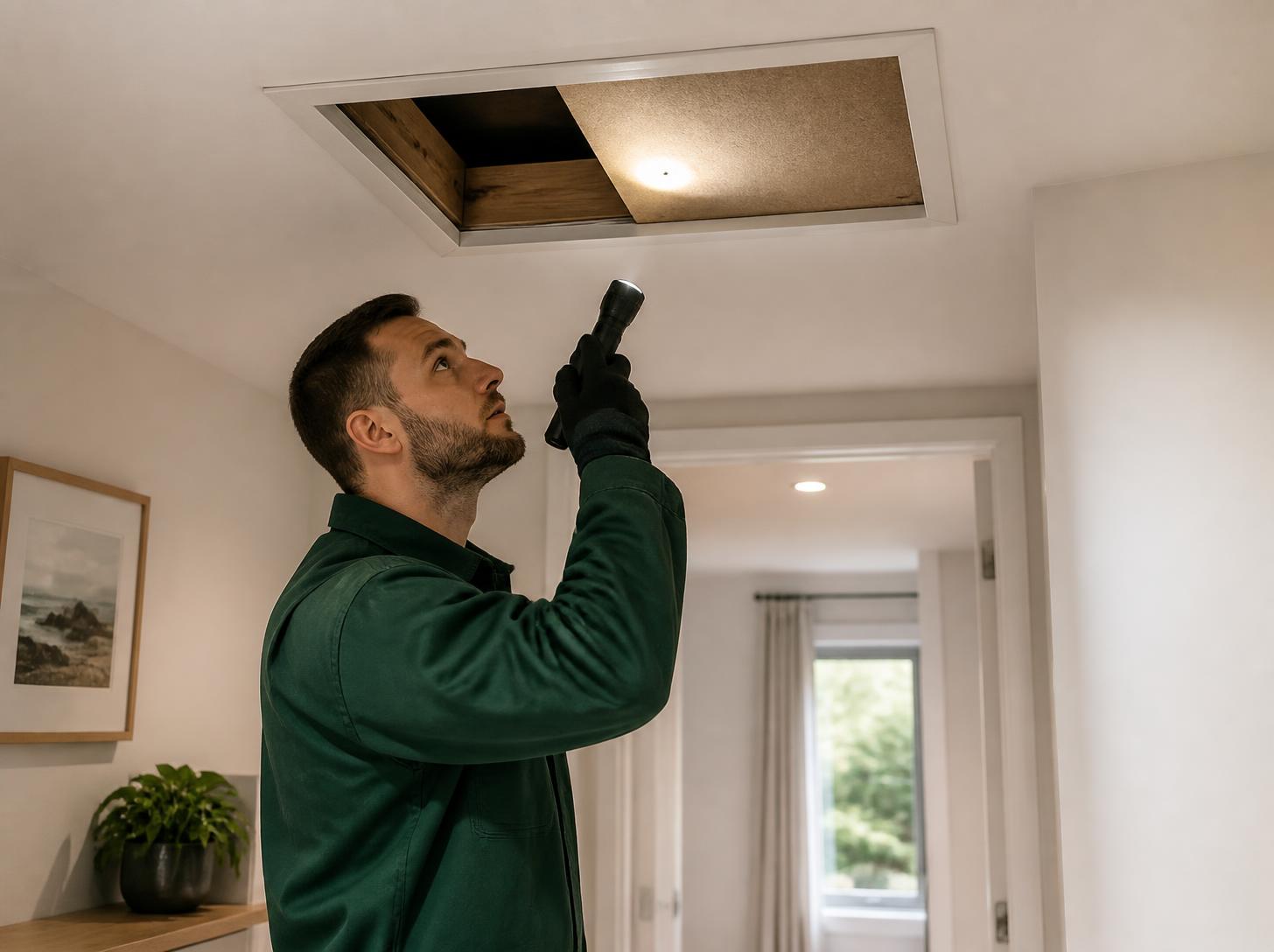
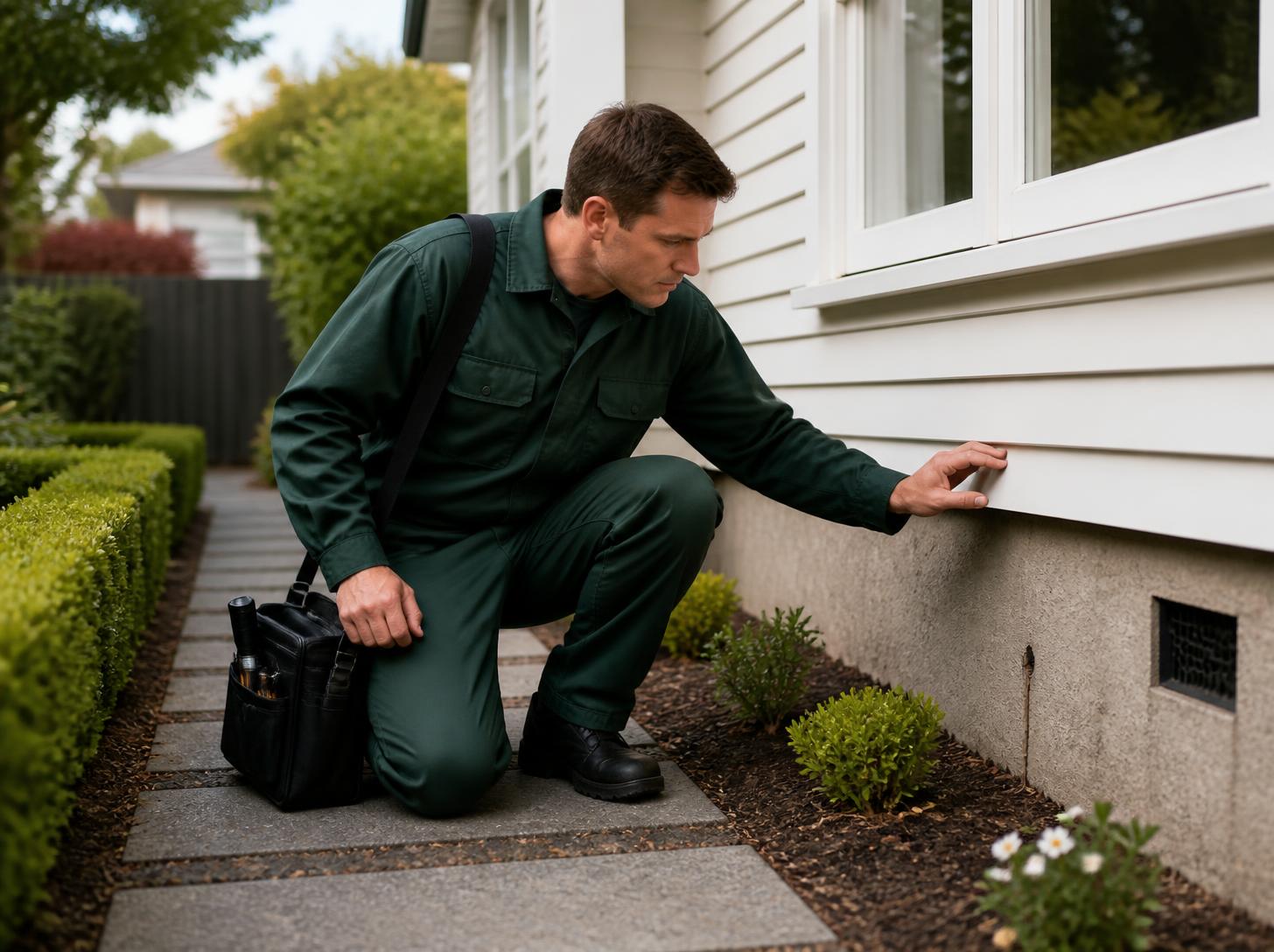
Signs: a subfloor access that does not close properly, a broken vent grille, or animal droppings and disturbed ground under the house. This is the situation where treating only the interior reliably fails.
4. Brought in on clothing or belongings
Fleas hitch rides. Visiting a house with an infestation, second-hand furniture, or a rug from a home with pets can all introduce them. Usually a smaller problem than the others — but it establishes if there is carpet to develop in.
5. A neighbouring property
Less common, but in adjoining dwellings — terraces, flats, apartments — fleas can move through shared subfloor space or under adjoining doors, particularly where a neighbouring unit has an untreated infestation or animals living underneath.
Why bombs and foggers usually fail
Supermarket flea bombs are a recurring disappointment, for three specific reasons:
- They don't reach the pupae. The protective cocoon resists most insecticides. Bombs kill visible adults and leave the 95% intact, which is why fleas reappear within a fortnight.
- They don't penetrate carpet pile. A fogger deposits product on horizontal surfaces. Larvae live deep in the pile and in floor cracks, below where the mist settles.
- They don't touch the subfloor. If the reservoir is under the house, an interior bomb is treating the wrong space entirely.
What actually clears it
Find the reservoir
Interior carpet, subfloor, or both. This determines whether the job succeeds. In older Auckland housing the subfloor is very often the real source.
Vacuum thoroughly first
This matters more than people expect. Vacuuming removes eggs and larvae, and the vibration triggers dormant pupae to emerge — so they hatch into the treatment instead of two weeks after it. Empty the vacuum outside.
Wash all bedding hot
Any soft furnishing that can go through a hot wash, should.
Residual insecticide plus growth regulator
Across all carpeted areas, skirtings and resting spots. The insect growth regulator is what breaks the cycle — it prevents larvae ever reaching breeding adults, which is what stops the population regenerating.
Treat the subfloor if it's involved
And block whatever animal access created the problem. Skipping this is the single most common reason a flea job fails.
Vacuum daily for 10 to 14 days
Emerging pupae keep hatching into the treated residual. Daily vacuuming both removes them and keeps triggering emergence, which shortens the tail considerably.
What to expect afterwards
You will still see fleas for one to two weeks. This is normal and is not treatment failure. Protected pupae continue hatching, then walk onto treated surfaces and die. Numbers should fall steadily.
If you are still getting bites after three weeks, call us back. That points to an untreated reservoir — nearly always a subfloor, or an animal that is still getting under the house.
Flea treatment in Auckland typically costs $190 to $340 including GST, or $300 to $480 where subfloor work is required.
Frequently asked questions
How can I have fleas if I don't own a pet?
The most common explanation is that previous occupants had animals and flea pupae have been lying dormant in the carpet. Pupae can survive for several months without a host and hatch in response to vibration, warmth and carbon dioxide — which is to say, in response to you moving in and walking around.
How long can fleas live in an empty house?
Adult fleas need a blood meal to reproduce and do not survive long without one. But pupae in their protective cocoons can remain dormant for several months, and in cool conditions longer. This is why a house that has been empty over winter can produce an immediate flea outbreak the day someone moves in.
Can fleas come from rats or mice in the roof?
Yes. Rodents carry fleas, and if you have rats or mice in the subfloor or roof space, fleas can move down into living areas — particularly once the rodents are removed and the fleas lose their host. If you have both problems, the rodents need treating too or the fleas will keep returning.
Why do flea bites happen mostly around the ankles?
Fleas live in carpet and floor-level furnishings and jump upward to find a host. They generally reach lower legs and ankles first. Bites typically appear as small red spots with a darker centre, often clustered or in short lines of two or three.
How much does flea treatment cost in Auckland?
A standard residential flea treatment is $190 to $340 including GST. Where subfloor treatment is needed — common in Auckland villas and bungalows — expect $300 to $480. See our cost guide.
What kills fleas instantly in a house?
A contact insecticide spray kills the adult fleas it lands on within minutes, and a vacuum removes adults, eggs and larvae straight away. Neither touches the pupae sealed in their cocoons, which is why fleas seem to come back a week later. Instant kills are not the goal; exposing every stage of the life cycle is. That takes vacuuming, a growth regulator and a residual across the floors.
What do fleas hate most in a house?
Dry air, bare hard floors and a vacuum cleaner. Flea larvae dry out in low humidity and struggle to develop on clean, hard surfaces, and regular vacuuming removes eggs and larvae before they mature. Smells such as vinegar, citrus, cedar or peppermint oil are widely recommended online, but none has been shown to clear an infestation. At best they move a few adults along; the pupae in the carpet are unaffected.