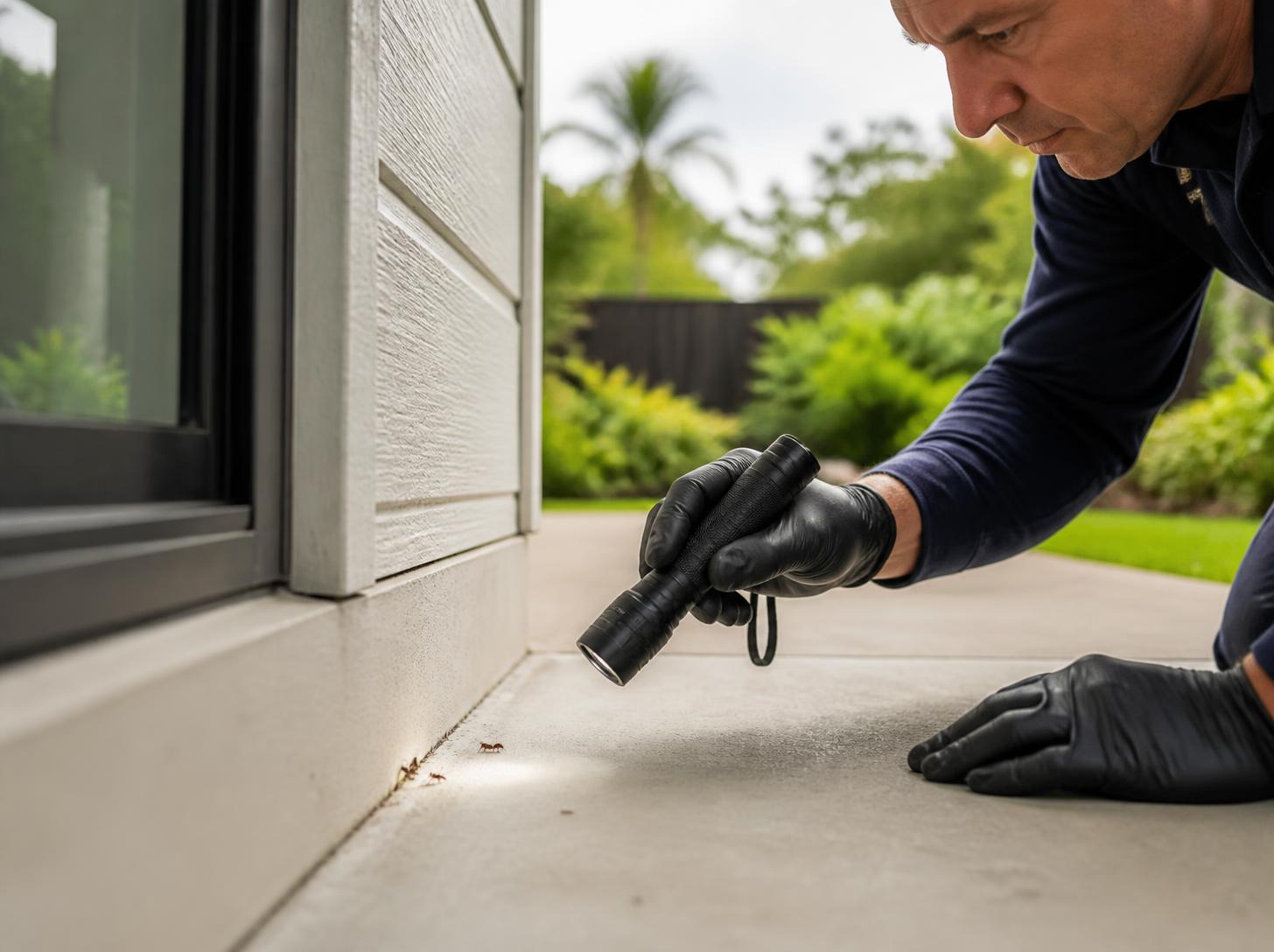
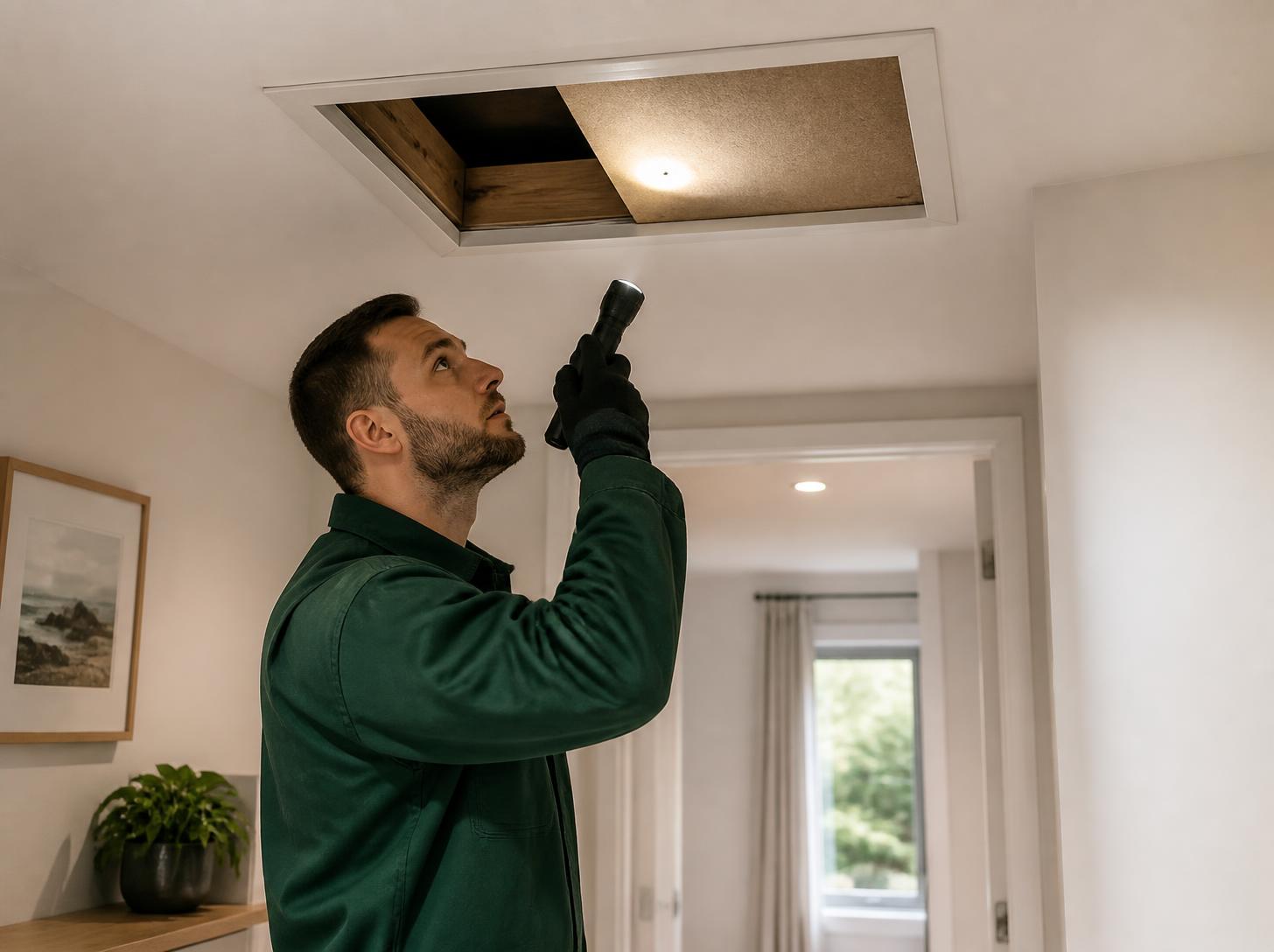
It is the question we get asked most, usually by someone with a crawling baby, a dog that eats everything, or both.
The honest answer: modern professional pest control is low-risk when it is applied correctly, and most of the actual risk comes from how a product is used rather than what it is. That is not a marketing line — it is the central argument for professional application over a supermarket product used according to guesswork. It applies to household pest control of every kind, from rodent baiting to flea treatment.
How pest control products are regulated in New Zealand
Every pest control substance used in New Zealand must be approved by the Environmental Protection Authority. Approval is not a formality — it involves assessment of toxicity to humans and animals, environmental fate, and the controls needed to manage the risk.
Approved substances carry legally binding controls under the Hazardous Substances and New Organisms Act 1996, covering how they may be applied, at what dose, in what locations, how they must be stored and transported, and what records must be kept. The EPA maintains a public database of approved substances and their controls.
Label directions are not advice. They are legally enforceable, and applying a product outside them is an offence.
Targeted application is the key idea
The most important safety factor is not which chemical is used. It is where it goes.
Older-style pest control involved broadcast spraying across floors and surfaces. That is not how competent work is done now, and the shift is as much about effectiveness as safety — pests live in cavities, so treating cavities works better.
| Treatment | Where it goes | Exposure risk |
|---|---|---|
| Cockroach gel bait | Pinhead dots inside cavities, hinge recesses, behind appliances | Very low — not on any surface people touch |
| Rodent bait | Inside tamper-resistant lockable stations | Very low — physically inaccessible to pets and children |
| Ant bait | Contained stations or gel on trails, out of reach | Very low |
| Crack-and-crevice spray | Skirting junctions, cavity edges, service penetrations | Low once dry |
| External perimeter | Foundation line, outside the building | Low — no interior exposure |
| Wasp nest dust | Directly at the nest entrance | Low, provided the area is kept clear during treatment |
Note what is not on that list: spraying skirtings across a whole house, or misting living areas. We do not do that, because it exposes people to product without meaningfully improving control.
Rodent bait, specifically
This is the one that worries pet owners most, and the concern is legitimate — rodenticides are designed to be lethal to mammals, and dogs are opportunistic eaters.
Two things manage it:
- Tamper-resistant lockable stations. Bait is never placed loose. The stations require a key to open, are heavy enough not to be carried off, and are positioned along rodent runs — behind appliances, in roof spaces, along fence lines — rather than anywhere a pet spends time.
- Trapping as an alternative. Where a household has a dog that digs, free-roaming cats, a crawling child, or simply would rather not have toxicant on the property, we use snap traps in protected housings instead. It is a completely legitimate choice and we will not push back on it.
Tell us about your animals before the visit, not on the day. Species, where they spend time, and anything relevant — a dog that digs, a cat that gets into the subfloor, a rabbit that free-ranges in the lounge. It changes what we use and where we put it, and it is far easier to plan around beforehand than to work around once we have arrived.
Fish, birds and beehives
These need specific handling and are worth flagging separately.
- Fish. Highly sensitive to insecticides. Cover the tank completely with plastic sheeting and switch off the air pump before we arrive — a running pump actively draws airborne product into the water. Keep it off until the re-entry period has passed and the area is ventilated.
- Birds. Also sensitive, particularly to airborne product. Ideally move the cage out of the building during treatment and for the re-entry period.
- Beehives. Tell us if there are hives on the property or next door. It affects product selection and external placement, and we will work around them.
- Reptiles and small mammals. Move them out of treated rooms, and cover any vivarium with its ventilation closed.
Are the fumes from pest control harmful?
With modern targeted treatments, the fumes are rarely the risk people fear, but they are a reason to follow the re-entry time. Most of what you smell after a spray is the solvent carrying the insecticide, and it fades as surfaces dry. The US National Pesticide Information Center advises keeping children and pets out until treated surfaces are dry, and opening windows and running fans to speed that up.
Two points are worth knowing. First, smell is not a reliable guide: NPIC notes you cannot tell from odour alone whether pesticide is still in the air, so go by the time you are given, not your nose. Second, a pesticide residue stays on treated surfaces after drying; that is how residual treatments keep working. It is why treatment goes into cracks, voids and skirtings rather than on benches, toys or pet bowls. Gel baits and bait stations produce no fumes at all.
Signs of poisoning. If a child may have swallowed or touched a pest control product and seems unwell, call the National Poisons Centre on 0800 764 766 (free, 24/7), or 111 if they are unconscious or struggling to breathe. For pets, tremors, seizures, breathing difficulty or collapse need a vet immediately.
Practical precautions that actually matter
- Keep children and pets out of treated areas until surfaces are fully dry — typically 3 to 4 hours
- Put pet bowls, toys and bedding away before we arrive, and wash them afterwards if they were near a treated area
- Cover fish tanks and turn off air pumps
- Remove or cover food, and clear kitchen benches where crack-and-crevice work is planned
- Ventilate the treated area once the re-entry period has passed
- Do not mop or wash treated skirtings and edges for two weeks — it removes the residual and you will need the treatment repeated
- Leave bait stations and traps where they were placed; tell children not to touch them
More detail on timings is in do you need to leave the house during pest control.
Where the real risk sits: DIY products
This is worth saying plainly, because it runs against intuition. In our experience the higher-risk scenarios are usually DIY, not professional.
- Loose bait blocks. Sold in supermarkets and frequently placed in an open tray under the sink or in the garage — precisely where a dog will find them.
- Over-application. "More must work better" is the most common DIY error. It does not improve control and it substantially increases exposure.
- Foggers and bombs in occupied spaces. These distribute product across every horizontal surface in a room — including benches, toys and pet bedding — which is close to the opposite of targeted application.
- Repeated spraying. Households frustrated by ants coming back often spray weekly for months, accumulating far more product indoors than a single professional treatment would ever involve — and, with Argentine ants, making the problem worse.
- Products used off-label. Garden insecticide used indoors, for example. The label restrictions exist for a reason.
Pregnancy, allergies and respiratory conditions
Tell us. It is relevant and it is not intrusive to ask.
If anyone at the property is pregnant, has asthma or another respiratory condition, or has chemical sensitivities, we will adjust the approach — favouring bait and gel over any spray application, extending re-entry periods, scheduling so the person can be out for longer, and increasing ventilation. In many cases we can complete a job with no interior spray application at all.
This is general information about how treatments are applied, not medical advice. For health questions specific to your situation, talk to your doctor or Healthline on 0800 611 116.
What to ask any pest controller
Reasonable questions, and you should get straight answers:
- What product are you using, and is it EPA-approved for this use?
- Where exactly will it be placed?
- How long until children and pets can re-enter?
- Will I get a written record of what was applied and where?
- Are there lower-toxicity options for my situation?
- What do I need to do before you arrive, and afterwards?
We provide a written record of every product used and its placement as standard on every job — for rentals and food premises it is essential, and for everyone else it is simply reasonable to have.
Frequently asked questions
Is pest control safe for pets and children?
Modern professional pest control is low-risk when applied correctly. The products are approved by the New Zealand EPA and applied in targeted placements — gel dots in cavities, bait in lockable stations, crack-and-crevice treatment — rather than sprayed across living surfaces. Most of the actual risk comes from how a product is used, not what it is, which is the main argument for professional application over DIY.
How long should pets stay away after a treatment?
For most interior treatments, 3 to 4 hours until surfaces are fully dry. External-only treatments usually need no exclusion once dry. Gel baiting for cockroaches often needs no exclusion at all. We give you exact timings on the day, because they vary with product, ventilation and weather.
Is rodent bait dangerous to dogs and cats?
It can be, which is why all bait is placed in tamper-resistant lockable stations that pets cannot open, positioned where rodents travel and pets do not. Where a household has a dog that digs, or you would simply rather not have toxicant on site, we use trapping instead. Just tell us.
What happens if a dog walks on grass treated with pesticide?
If the product has dried, usually very little, but the label decides. The US National Pesticide Information Center advises keeping pets off treated lawns until the product is completely dry, following the label, and allowing 24 hours or more for granular products. If your dog shows drooling, vomiting, tremors, seizures or breathing difficulty after being on treated grass, call your vet immediately and have the product name ready.
What about fish tanks?
Fish are highly sensitive to insecticides. Cover the tank completely with plastic sheeting and switch off the air pump before we arrive — an air pump will draw airborne product straight into the water. Tell us the tank is there when you book so we can plan placements around it.
Can I ask for lower-toxicity options?
Yes, and it is a reasonable request. Trapping instead of rodenticide, gel baiting instead of spray, targeted crack-and-crevice work instead of broadcast application, and mechanical exclusion instead of chemistry wherever it will do the job. Tell us your concerns when you book and we will build the treatment around them.
- EPA New Zealand — insecticides and pesticides at home
- EPA New Zealand — approved hazardous substances with controls
- Hazardous Substances and New Organisms Act 1996
- Health New Zealand — health information
- National Pesticide Information Center — Minimizing pesticide exposure
- National Pesticide Information Center — Pets and pesticide use
- National Pesticide Information Center — Pesticides in indoor air
- National Pesticide Information Center — Pets FAQ
- National Poisons Centre