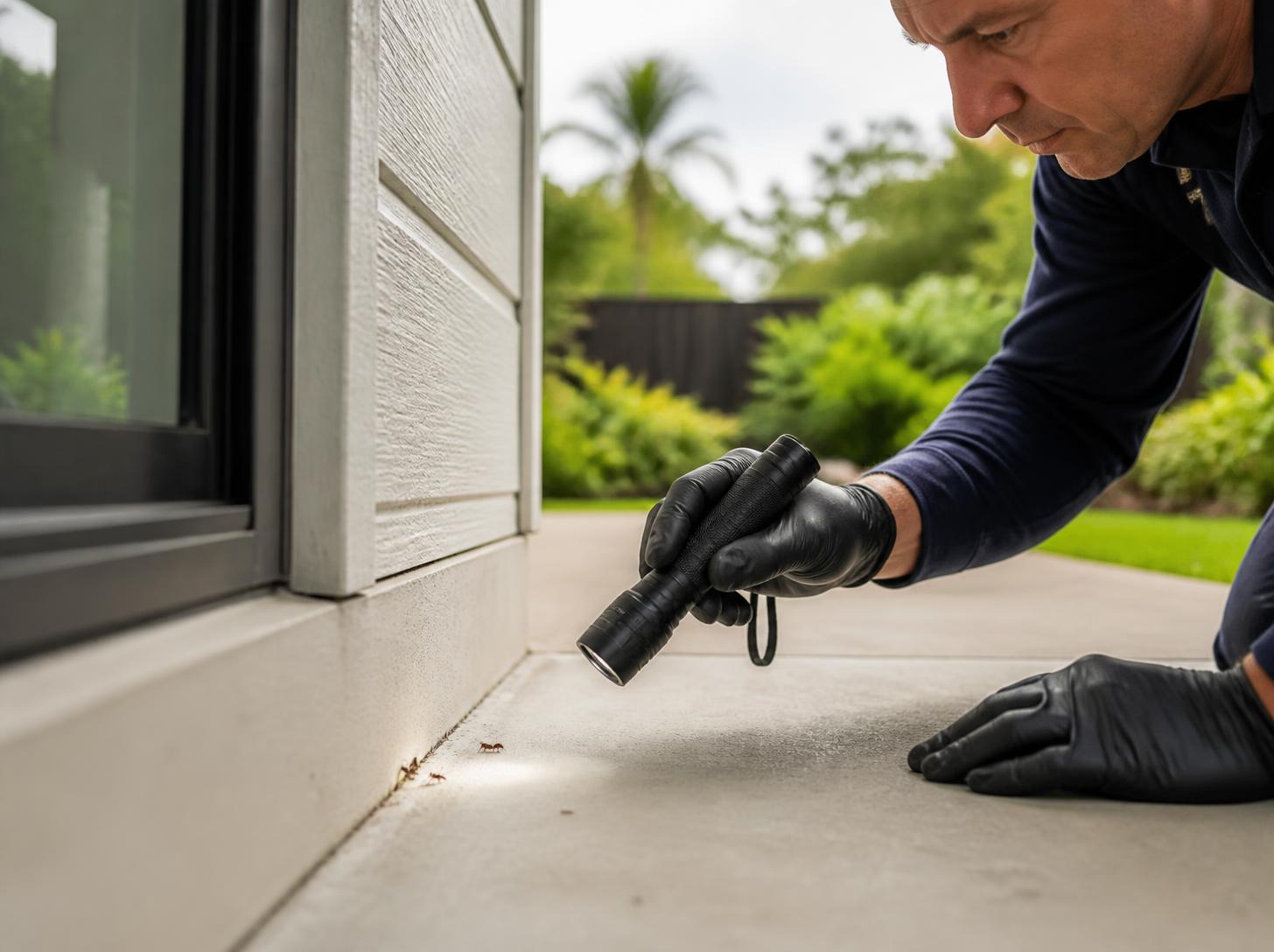
A house that suddenly fills with flies almost always has one of four explanations, and each has a different fix. Swatting and spraying deal with the flies you can see, but the source is usually somewhere else: outside in the bins, up in the roof space, in the fruit bowl, or down the drain.
This guide helps you work out which fly you have, why it is there, and how to get rid of it for good. For roof-void cluster flies, commercial kitchens or flies you cannot trace, see our page on fly control in Auckland.
Why you suddenly have lots of flies in the house
The kind of fly and where it gathers tell you the cause. Slow, dozy flies on sunny windows in autumn or spring are cluster flies coming out of the roof or walls. Flies around the back door and bins mean house flies or blowflies breeding nearby. Tiny flies at the fruit bowl are vinegar flies, and small moth-like flies at the sink or shower are drain flies.
| What you see | Most likely | Where they come from |
|---|---|---|
| Sluggish dark flies on sunny windows, autumn to spring, often in the same rooms every year | Cluster flies | Hibernating in the roof void or wall cavities |
| Grey flies on the bench and around the back door in warm weather | House flies | Bins, compost, pet waste, lawn clippings |
| Large, loud, shiny green or blue flies | Blowflies | Meat scraps in the bin, pet food, or a dead animal |
| Tiny flies with red eyes around fruit, the kitchen bin or wine glasses | Vinegar (fruit) flies | Overripe fruit, food waste, recycling |
| Tiny fuzzy, moth-like flies on bathroom or kitchen walls | Drain flies | The sludge lining sink, shower and floor drains |
One pattern is worth knowing on its own. A sudden burst of large blowflies indoors, sometimes with a bad smell, often means a dead rat, mouse or bird in the roof, a wall or under the floor. Blowflies lay their eggs on carrion, and the new flies emerge into the house about a week later. Outbreaks like this rarely last long, and they stop once the carcass is found or dries out. If you have had rodents, rodent control deals with the cause.
House flies and blowflies
House flies (Musca domestica) and blowflies breed outside in rubbish, compost, pet waste and anything rotting, and almost all the flies found inside a building have come in from outside. In warm weather they can go from egg to adult in about a week, which is why numbers explode in summer. The fix is removing the breeding sites, then keeping flies out with screens and door discipline.
Recognising them
The house fly is grey, about 5–8 mm long, with four dark stripes on the back of the thorax. Blowflies are bigger, around 14 mm for the common native species, and many are shiny metallic green or blue. Both lay their eggs in warm, moist, rotting material, and each female lays several batches of about 100 to 150 eggs. The maggots feed for a few days, then crawl off to somewhere drier to pupate, which is why maggots sometimes spill out of a bin.
Are flies a health risk?
They can be. House flies and blowflies do not bite, but they feed on rubbish, faeces and rotting food and then land on ours, and they can carry bacteria and viruses that cause food poisoning and diarrhoeal illness. That is a reason to cover food and keep flies off kitchen benches, not a reason for alarm. In food businesses it is a food safety issue, and fly management is part of the pest control programme.
What gets rid of house flies fastest
Find the source
Check the wheelie bin, the kitchen bin, the compost, the dog's area, lawn clippings and anything that has been left out. Maggots confirm it.
Remove or seal it
Bag food waste before it goes in the bin, keep lids closed, and put the bin out every week, even when it is not full. Food waste left more than a week is very likely to breed flies.
Clean the bin
Wash out wheelie bins and kitchen bins regularly. Residue in the bottom is enough to breed flies.
Deal with the flies already inside
A fly swat, sticky fly paper or a quick household spray takes care of the few already inside. Outdoor baited traps work, but they smell, so put them well away from the house.
Cluster flies
Cluster flies (Pollenia species) are dark, sluggish flies that overwinter hidden in roof voids and wall cavities, often in the same house year after year. They do not breed indoors: their larvae live as parasites in earthworms in lawns and pasture. On warm days from autumn to spring they wake and crawl out towards the light, which is why they gather on sunny windows.
How to recognise cluster flies
A cluster fly is a little larger and stockier than a house fly, about 8 mm long, dull dark grey rather than shiny, with fine golden hairs on the thorax that wear off with age. It is slow and clumsy, and easy to catch. Crushed, it leaves a greasy spot and has a sweetish smell. You find them on the windows, around light fittings and ceiling roses, and around window frames, often in rooms facing the sun.
How long is cluster fly season?
Cluster flies move into buildings in autumn as the days shorten, and are a nuisance on and off until spring. The last generation of the summer goes looking for a sheltered place to hibernate, and in New Zealand, Kiwicare notes, that happens in late autumn and early winter. They come out on warm, sunny winter days, then leave in spring to lay their eggs in the grass. Several generations breed outdoors through the summer.
How to get rid of cluster flies
Swatting and spraying the flies on the window do not solve it, because the rest of them are hidden in the roof and walls. The Pest Management Association of New Zealand advises that control starts outside: seal and screen the gaps around eaves, vents, windows and cables, and apply a residual treatment to the outside walls and eaves before the flies move in. Once they are inside, vacuuming them up gives quick relief.
One warning: killing large numbers inside wall cavities can backfire, because the dead flies attract larder and carpet beetles that then wander into the house. Timing and entry-point treatment matter more than the amount of insecticide. Roof-void and exterior work of this kind is a job for cluster fly treatment by a professional in most houses, particularly two-storey homes and those close to paddocks or large lawns.
Fruit flies (vinegar flies) in the kitchen
The tiny flies around the fruit bowl are vinegar flies, Drosophila species, usually called fruit flies in New Zealand. They breed in overripe and fermenting fruit and vegetables, food waste, recycling and spilled drinks, where their larvae feed on yeasts. In warm conditions the whole life cycle can take as little as eight days. Remove the fermenting source and they die out quickly.
What causes fruit flies in the house?
They are drawn to the smell of fermentation. The usual sources are a forgotten banana or potato, the bottom of the fruit bowl, the kitchen bin, the recycling crate with beer or wine bottles, the compost caddy and a damp sponge or mop. At only 2–4 mm long, with red eyes, they are small enough to get through ordinary fly screens.
How to get rid of fruit flies quickly
Find and throw out the source, empty and rinse the kitchen bin and recycling, and keep ripe fruit in the fridge for a week or two. A simple trap catches the adults: a small dish of cider vinegar with a drop of dishwashing liquid, which breaks the surface tension so the flies sink. The trap is for mopping up; it will not solve the problem while something is still fermenting.
Do fruit flies lay eggs in beds?
No. Vinegar flies lay their eggs on fermenting food, because that is what their larvae eat, and they do not bite. A bedroom with fruit flies has a food source nearby: a glass, a plate or a bin. With the source gone, an infestation usually ends within a week or two, as the last adults die off.
Not the Queensland fruit fly
Kitchen vinegar flies are a nuisance. The Queensland fruit fly (Bactrocera tryoni) is a serious biosecurity threat. It is a different insect: 6–8 mm long, a little larger than a house fly, reddish-brown with distinct yellow markings and clear wings, and its maggots eat more than 200 kinds of fruit and vegetable. MPI has caught it in surveillance traps six times, most recently in Mt Roskill, Auckland, in 2026, and stopped it establishing each time.
If you think you have found one, MPI asks you to photograph it, catch it if you can, and call 0800 80 99 66. If MPI ever sets up a controlled area near you, follow its rules on moving homegrown fruit and vegetables.
Drain flies
Drain flies, also called moth flies (Psychodidae), are small, grey and fuzzy, 2–5 mm long, and rest on bathroom and kitchen walls with their wings folded like a roof. They breed in the slimy biofilm that lines drains, where the larvae feed on bacteria and algae. Spraying the adults does little. Cleaning the film out of the drain removes the source.
Check which drain it is by taping a clear plastic bag or a piece of sticky tape loosely over each drain overnight: flies caught underneath show you the one. Then scrub the inside of the drain and the overflow with a stiff brush, and flush it. Also check shower traps, floor drains, the drip tray under the fridge, and the bottom of wet rubbish bins. The eggs hatch within two days and the larvae take one to three weeks, so expect a few adults for a short time after cleaning.
How to stop flies coming into the house
Keep flies from finding a reason to come in, especially in warm, humid weather, and make it harder when they try. Fit fly screens on the windows and doors you open, keep door seals in good order, put bins and compost well away from doors, keep bin lids shut, and pick up pet waste daily. At night, warm yellow outdoor bulbs draw fewer insects than bright white ones.
- Screens: fine mesh on kitchen and bedroom windows and any door left open in summer.
- Bins: tight lids, bagged food waste, weekly collection and a regular wash.
- Compost: vegetation only; cooked scraps and meat in an open heap breed flies.
- Pets: pick up droppings daily and do not leave pet food out.
- Kitchen: cover food, wipe benches, and rinse recycling before it goes in the crate.
When to call a professional
Most house fly and fruit fly problems are solved at the source without a professional. It is worth calling one for cluster flies that come back every year, flies you cannot trace to a source, a suspected dead animal in the roof or walls that you cannot reach, and any food business, where fly control is part of the food safety plan.
For cafés, restaurants and food manufacturers, commercial fly management covers the source work, insect light traps (not open fly zappers) placed away from food preparation, and records for your food control plan. For homes, call 09 925 0448 and describe the flies, where they gather and when they appear.
Frequently asked questions
Do fly sprays work?
They kill the flies they hit, and that is all. A household fly spray has no effect on the eggs and maggots developing in the bin, the compost or the drain, so a new batch of adults is usually only days away. House flies have also become resistant to many insecticides. Use a spray for the odd fly indoors, and spend the effort on finding and removing where they breed.
What smell keeps flies away?
Herbs such as basil, mint and lavender, essential oils, and bags of water with coins in them are all widely recommended, but we are not aware of good evidence that any of them keeps flies out of a house. Flies come in because something outside smells of food: rubbish, compost, pet waste or cooking. Removing those smells and screening the windows does far more than adding a pleasant one.
Are cluster flies dangerous?
No. Cluster flies do not breed in food, rubbish or inside the house, and they are not associated with spreading disease the way house flies and blowflies are. Their larvae live in earthworms outdoors. The trouble is numbers and mess: hundreds on the windows, crushed flies that leave a greasy mark, and dead flies in wall cavities that can attract carpet beetles.
Why are flies worse in warm, humid weather?
Because heat speeds up the life cycle. In warm conditions a house fly or blowfly can go from egg to adult in about a week, so numbers build quickly through summer. Damp weather also keeps rubbish, compost and pet waste moist, which is where flies lay their eggs. And cluster flies hidden in a roof space come out whenever the sun warms the walls.
Do fly zappers work indoors?
UV light traps can work indoors, where they are not competing with daylight, and they are standard in commercial kitchens. Placement matters. An electric grid zapper should never go near food, because insects can burst on the wires and scatter fragments; glue-board light traps are better in kitchens. In a home, a zapper treats the symptom, not the source that is producing the flies.
How long do house flies live?
Adult house flies usually live about 15 to 25 days, according to the Pest Management Association of New Zealand. That is long enough to matter, because a female lays several batches of around 100 to 150 eggs in her life, and in summer those eggs can become breeding adults in about a week. Killing adults without removing the breeding source leaves the next generation on its way.
- UC IPM (University of California) — Flies: house flies and blow flies
- Texas A&M AgriLife Extension — Indoor flies and their control
- Pest Management Association of New Zealand — Cluster flies
- Pest Management Association of New Zealand — Flies
- Kiwicare — Cluster flies
- Kiwicare — Flies
- Ministry for Primary Industries — Queensland fruit fly
- Manaaki Whenua Landcare Research — Vinegar flies
- Manaaki Whenua Landcare Research — Blowflies
- EPA New Zealand — insecticides and pesticides at home