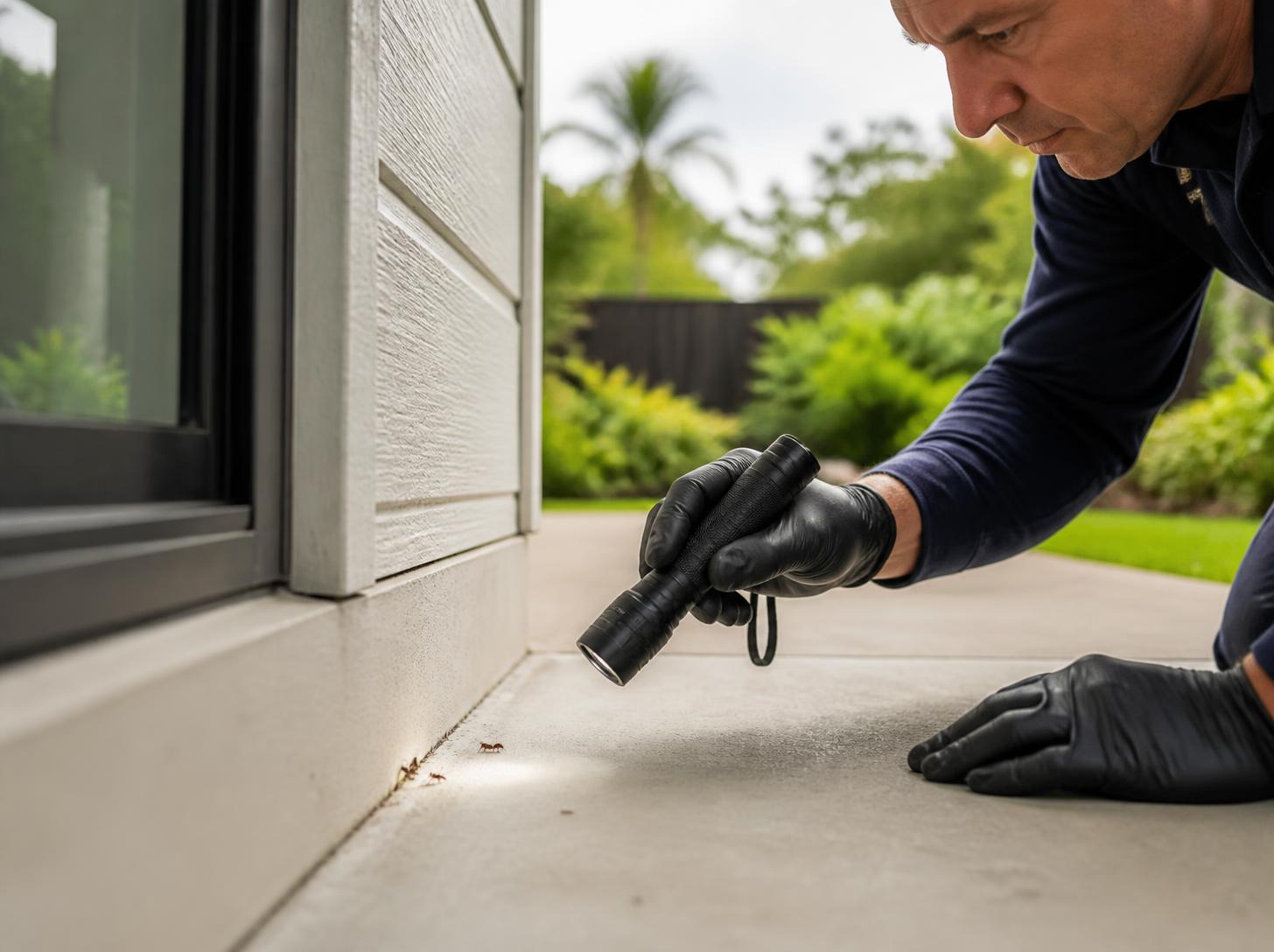
Pest problems in Auckland are not random. They run on an annual cycle driven by temperature, rainfall and food availability, and once you know the pattern you can get ahead of it rather than reacting to it.
Here is what is actually happening month by month, and — more usefully — what is worth doing when, whether you handle it yourself or book pest control services.
The quick version
| Season | Dominant pests | What to do |
|---|---|---|
| Spring (Sep–Nov) | Ants emerging, wasp queens founding nests, flea eggs hatching | Treat ants early; find and remove small wasp nests while they are trivial |
| Summer (Dec–Feb) | Ants at peak, wasps building fast, fleas, cockroaches | Wasp nests become findable; ant baiting most effective |
| Autumn (Mar–May) | Rodents moving indoors, wasps at maximum size then collapsing | The critical window. Seal the building before rodents arrive |
| Winter (Jun–Aug) | Rodents indoors, German cockroaches year-round | Treat active rodent problems; plan proofing repairs |
Spring: September to November
Ants wake up. As soil temperatures rise, ant colonies that have been quiet all winter resume foraging. This is when people first notice trails along benches and window frames. It is also the best time to treat, because colonies are actively foraging and will readily take bait back to the nest.
Wasp queens found new nests. Each spring, queens that overwintered emerge and start building. Through September and October a nest might be the size of a golf ball with a handful of workers. It is completely unremarkable — and it is the easiest it will ever be to deal with. Every enormous February nest was this size in October.
Fleas begin hatching. Warming temperatures trigger dormant pupae. Households that had no flea problem all winter suddenly do, particularly where a property has been vacant.
Borer start flying. From about October, adult common house borer begin chewing out of untreated timber, with most emerging between November and January. Small brown beetles on windowsills and fresh dust under old holes are the signs. The borer flight season is the time to check whether old damage is still active, and to treat roof voids and bare timber.
Worth doing now: ant baiting; a walk around the section looking for early wasp activity; flea treatment if you have pets.
Summer: December to February
Ants peak. Argentine ants are at maximum activity, and this is when they most often move indoors — either during dry spells seeking moisture, or after heavy rain when outdoor nests flood. Note that both extremes push them inside, which is why people find the timing confusing.
Wasps become a genuine problem. Colonies that were founded in spring now hold hundreds and then thousands of workers. From January, German and common wasps start showing serious interest in outdoor eating and become defensive around the nest. The Department of Conservation notes New Zealand has some of the highest introduced wasp densities anywhere in the world, largely because our winters do not kill colonies off the way northern hemisphere winters do.
Fleas hit their stride. Warm, humid Auckland summers are close to ideal for the flea life cycle. Development that takes months in winter can complete in under three weeks.
Borer keep emerging. The house borer flight season runs into February, so new holes and fresh dust can still appear through summer in untreated floors, stairs and roof timbers.
Cockroaches increase. Warmth speeds up development. Gisborne cockroaches also wander indoors more in summer, generating a lot of alarmed phone calls about a large cockroach in the bedroom that is, in fact, harmless.
Worth doing now: deal with wasp nests as soon as you find them; keep ant baiting going; treat fleas properly rather than repeatedly bombing.
Autumn: March to May — the important one
If you do one thing all year, do it now.
Rodents move indoors. This is the defining event of the Auckland pest year. Through March, outdoor food supply collapses — seed, fruit and insects all decline — and night temperatures drop. Rats and mice respond by moving toward reliable warmth and food, which means your roof space, subfloor and wall cavities. Call volumes for rodent control climb steeply from late March and peak in May.
The crucial point: the sealing work needs to happen in February and March, before they arrive. Sealing a building in June, once rodents are already nesting inside, is much harder and much less effective. Our rodent-proofing checklist is written specifically for this window.
Ants retreat. Foraging drops off as temperatures fall. Baiting becomes less effective because colonies are less active, which is why we push ant treatment earlier where we can.
Worth doing now: seal the building; cut vegetation back from the roofline; secure compost and pet food; check subfloor vents and gully traps.
February–April: wasp season peaks
Wasps are worst in New Zealand from late summer into autumn, roughly February to April. That is when Vespula colonies reach their maximum size, and when workers switch from hunting protein for the larvae to looking for sugar, which brings them to picnics, bins and fruit trees. Food is also getting scarcer, and defensive behaviour rises as the season goes on, so nests are at their most aggressive just as they are at their biggest.
The months when wasps are least aggressive are September and October, when a queen is building her nest alone or with a handful of workers. Through late April and May most colonies die out, although Landcare Research estimates about one in ten German wasp nests in New Zealand survives the winter. No scent kills wasps or keeps them away reliably; to get rid of wasps around the house, the nest is the target. Our guide on how to find and deal with a wasp nest explains what to look for, and professional wasp nest treatment covers the nests you should not tackle yourself.
Late summer and autumn: spiders and cluster flies
Spiders are most noticeable from late summer into early autumn, when many males mature and leave their webs to look for females, and some wander indoors. Late summer is the best spider season treatment window for the outside of the house. Later in autumn, cluster flies move into roof voids and wall cavities to spend the winter, and appear on sunny windows on warm days until spring.
Winter: June to August
Rodents dominate. They are inside now, and this is when most people first hear them. Anything you did not seal in autumn is being used. Treatment still works perfectly well in winter — it is just that the problem is now established rather than prevented.
German cockroaches carry on regardless. They live in heated interiors — behind fridges, in wall voids, around dishwashers — and are essentially season-independent. If anything they become more noticeable in winter because everything else has gone quiet.
Almost everything else goes dormant. Ants retreat underground, wasp colonies are dead, outdoor cockroach activity stops, flea development slows dramatically.
Worth doing now: treat active rodent problems; plan and book the proofing repairs you identified in autumn so they are done before next March.
The two windows that matter most
February–March: seal the building. This single window prevents most of the rodent problems that generate winter call-outs. Sealing gaps, trimming vegetation back from the roof, replacing corroded vents. It is unglamorous and it is the highest-value pest work you will do all year.
October–November: find the wasp nests. A nest you deal with in spring is a five-minute job. The same nest in February is a several-thousand-wasp colony that needs proper equipment and a careful approach. Walk your section in spring and look for wasps repeatedly entering one specific point.
How this varies across Auckland
The calendar shifts a little depending on where you are:
- Bush-edge properties across the North Shore and West Auckland get the autumn rodent influx earlier and harder, because the reservoir is metres away rather than kilometres.
- Rural-fringe properties around Papakura see a pronounced autumn mouse influx after paddocks are cut or harvested.
- New subdivisions in Flat Bush and Westgate get ant problems whenever earthworks happen, which is not seasonal at all — it follows the construction schedule.
- City apartments in Auckland Central are largely season-independent, because the building's interior climate is stable year-round.
If you would like a treatment timed to your property rather than to a generic calendar, describe your situation and we will tell you when the useful window actually is.
Frequently asked questions
What time of year are wasps worst in Auckland?
January to April, peaking in February and March. Wasp colonies start small in spring and build all summer, so a nest that was unnoticeable in November can hold several thousand workers by late February. This is why wasp call-outs cluster so heavily in late summer.
When do rats come inside in Auckland?
Activity climbs from March and peaks through April and May, as outdoor food supply collapses and nights cool. The practical implication is that sealing work should be done in February and March — before the pressure arrives, not after.
Are pests active in Auckland over winter?
Yes, but the mix changes. Rodents are the dominant winter pest because they are indoors with you. Insect activity drops sharply — ants and wasps largely disappear from view — but German cockroaches carry on year-round because they live in heated interiors and do not care what the weather is doing.
When is the best time to book preventive pest control?
Late summer, February through March, is the single most valuable window. It is after wasp nests have become findable and before the autumn rodent influx. A treatment and proofing round then prevents most of the problems that generate winter call-outs.
- NIWA — New Zealand climate information
- Department of Conservation — wasps
- Department of Conservation — rats
- Auckland Council — environment
- Manaaki Whenua Landcare Research — Life cycle of a wasp
- UC IPM — Yellowjackets and other social wasps
- Te Papa blog — Wellington's summer spiders
- Kiwicare — Cluster flies