Most pest problems in an Auckland home are straightforward once they are identified. A few are not. They survive treatment, come back after a quiet month, or spread into the flat next door. If you are dealing with one of those, it helps to know you are not doing anything wrong: some pests are simply built to be hard to get rid of, and knowing why is how you beat them. If you would rather hand it over, our home pest control service covers all of them.
What is the hardest pest to get rid of?
For most pest managers, German cockroaches and bed bugs top the list. They share the traits that make a pest difficult: they breed indoors all year, they hide deep in cracks that sprays do not reach, their eggs are protected from most treatments, and many populations are resistant to common insecticides. After those two, Argentine ants are the hardest household pest in Auckland, because their colonies stretch across whole streets.
Why some pests are so hard to get rid of
The difficult ones tend to have four things in common:
- Protected eggs. A German cockroach egg case (ootheca), a bed bug egg glued into a mattress seam and a flea pupa in its cocoon all survive treatments that kill the adults. A new generation hatches afterwards.
- Indoor breeding. Pests that live and breed inside a heated building have no off-season. Cold weather does not reset them.
- Resistance. Decades of insecticide use have selected for resistant populations. The US EPA notes that some bed bug populations are resistant to pyrethrins and pyrethroids, the active ingredients in most household sprays, and German cockroach resistance has been documented since the 1950s.
- Hiding in cracks. The deeper a pest lives inside the structure, in wall voids, motor housings or mattress seams, the less any surface treatment reaches it.
1. German cockroaches
The German cockroach (Blattella germanica) is the hardest pest we deal with in Auckland kitchens and apartments. It breeds entirely indoors, and a female carries an egg case of 30 to 40 eggs until just before they hatch, so the eggs are shielded from anything sprayed while she is carrying them. Populations build fast, shelter in the warm motor housings of fridges and dishwashers, and spread between apartments through risers and plumbing gaps.
What makes it worse is the instinct to spray. Surface sprays kill the cockroaches they hit and push the rest deeper into the walls or next door. What works is gel bait placed into the harbourage, a follow-up visit timed for the eggs that hatch afterwards, and, in apartment buildings, treating every affected unit together. Our German cockroach treatment is built around exactly that sequence.
2. Bed bugs
Bed bugs (Cimex lectularius) are hard to get rid of because they are small, flat and patient. They hide in mattress seams, bed frame joints, skirting cracks and behind power points, and they only come out to feed while you sleep. Their eggs are glued into those same cracks and are the stage most treatments do not reach, so a follow-up at around 10 to 14 days is part of every job.
Resistance makes DIY particularly frustrating. Bug bombs do not reach where bed bugs hide, and many populations shrug off the pyrethroid sprays sold in supermarkets. Moving to the couch or another bedroom just spreads them. The good news is that Health New Zealand is clear they are not known to spread disease, and a thorough, well-prepared bed bug treatment in Auckland, chemical, heat or both, does clear them.
3. Argentine ants
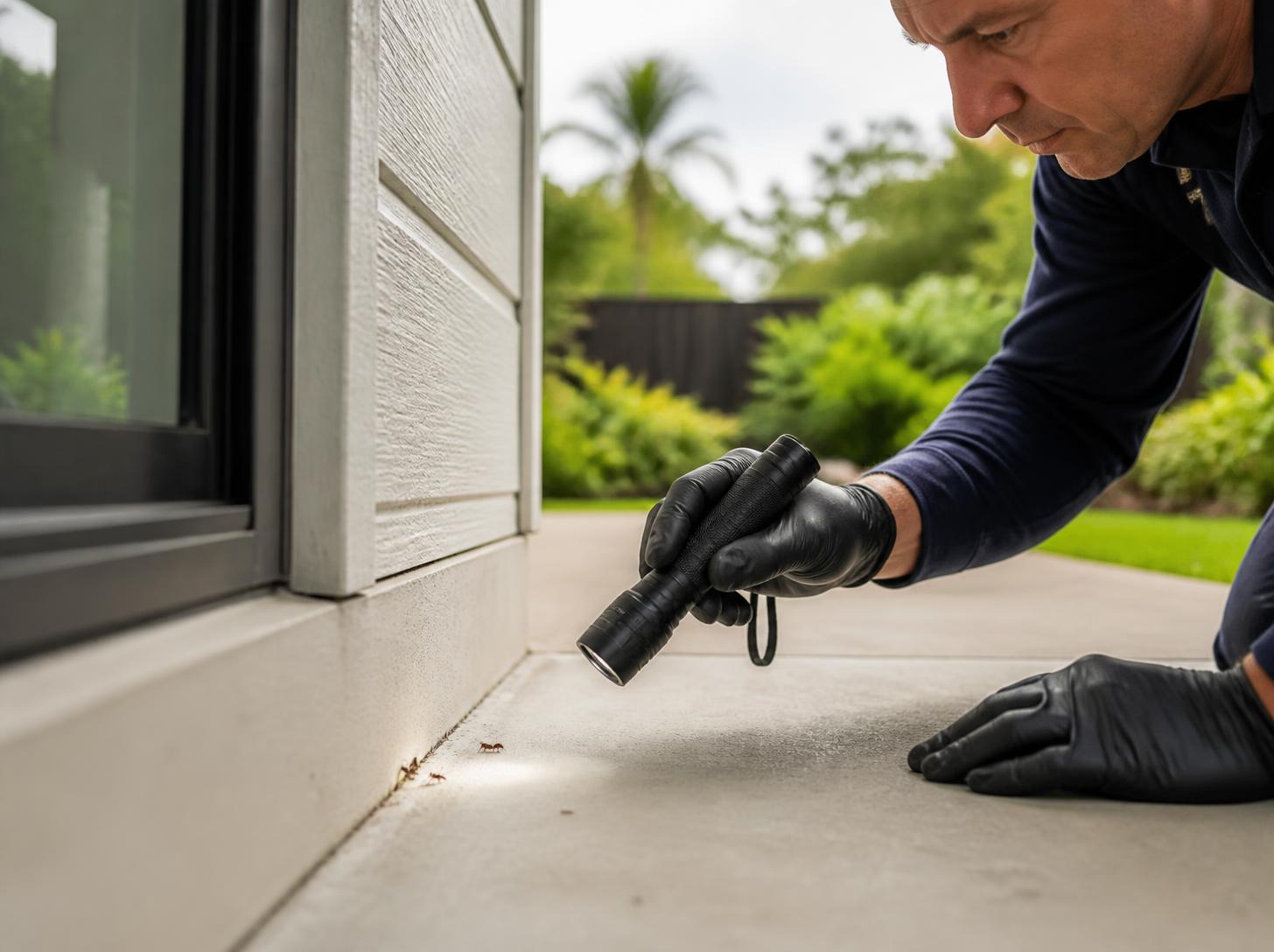
Argentine ants (Linepithema humile) are hard for a different reason: scale. A colony has many queens, and separate nests cooperate rather than compete, forming supercolonies that run under fences and across a whole neighbourhood. Kill the ants on your bench and the colony barely notices.
Spraying makes it worse. A repellent spray on a trail can cause the colony to split and set up new nests elsewhere, so a single nest becomes several. The answer is slow-acting bait that worker ants carry home to the queens, cutting off their honeydew supply from aphids and scale insects, and accepting that neighbouring properties affect your result. Our Argentine ant control uses non-repellent baits for this reason.
4. Rats and mice
Rats and mice are not hard to kill. They are hard to keep out. Remove every rat from a roof space and a new one can move in through the same gap within a fortnight, because the gap is still there. A rat needs an opening of only about 12 mm and a mouse about 6 mm, and older Auckland houses have plenty of both.
Rats are also wary of new objects, so traps and bait stations can sit untouched for days, which people read as failure. On bush-edge sections across the North Shore and West Auckland the reservoir next door is permanent. The job that lasts combines treatment with sealing every entry point, which is why our rat and mouse control always includes a written proofing list.
5. Fleas
Fleas are hard because the adults you see are a small fraction of the problem. Eggs, larvae and pupae live in carpet, upholstery and subfloors, and the pupae sit inside a sticky cocoon that insecticides do not penetrate. They can wait months for a host, which is why an empty rental can erupt with fleas the day new tenants move in, and why fleas keep appearing for a week or two after treatment.
Flea bombs miss the pupae, the carpet pile and the subfloor, and treating the pet alone never clears a house. A house flea treatment works when it combines vacuuming, an insect growth regulator across all the floors, subfloor treatment where animals have been underneath, and the pet treated through the vet at the same time.
6. Wasps in a wall or roof cavity
An exposed wasp nest is an easy job. A German or common wasp nest inside a wall cavity or roof space is one of the hardest, and the most dangerous to attempt yourself. It can hold thousands of wasps that sting repeatedly and defend the nest together, in a space you cannot see into.
The instinctive fix, blocking the hole, is the worst option: the wasps chew a new way out, often through the inside wall. The nest needs insecticidal dust applied at the entrance after dark, when the workers are home. That is a job for removing a wasp nest from a wall cavity professionally, not for a can of fly spray.
What pest is most damaging to a house?
In Auckland, rats and borer do the most damage to the building itself. Rats gnaw constantly, and chewed electrical wiring in a ceiling is a recognised fire risk; University of California IPM advisers list electrical sparks and fires among the dangers of rats in attics. Borer, the larvae of the common house borer beetle, tunnel through timber, and a Scion assessment attributes most insect damage to structural and decorative timber in New Zealand to them. Treated framing has made borer far less common in newer houses, which leaves borer in older timber homes as the concern.
Other pests damage what is inside the house rather than the structure. Rats and mice foul insulation and stored belongings. Argentine ants nest in wall cavities and around slab edges, which is a nuisance rather than structural damage. Cockroaches and bed bugs damage your peace of mind more than the building. The exception that matters nationally is exotic termites, such as the Australian subterranean termite. They can destroy house framing, but they are not established here, and a suspected find is a biosecurity matter for MPI rather than a pest control job.
What makes any pest harder to get rid of
Whatever the pest, the same handful of things turn a straightforward job into a long one:
- Clutter. Boxes, stored cardboard and piled belongings give pests somewhere to hide that a treatment cannot reach.
- Neighbours. Shared walls, shared fences and shared subfloors mean your result partly depends on theirs, especially with cockroaches, bed bugs and Argentine ants.
- DIY sprays and bombs first. They scatter cockroaches and bed bugs and split ant colonies, so the professional job starts from a worse position.
- Skipped follow-ups. The second visit deals with the eggs that survived the first. Leaving it out is the most common reason we see a pest come back.
- Entry points left open. For rodents especially, treatment without proofing is a subscription, not a solution.
If you are fighting one of these now, describe what you are seeing and we will tell you what it is, what it will take, and what it will cost. See our Auckland pest control cost guide for typical prices.
Frequently asked questions
Which pest is the most difficult to control in an apartment?
German cockroaches and bed bugs, for the same reason: apartments connect. Both spread between units through shared walls, risers and belongings, so treating one apartment in isolation often buys only a few weeks. The job that works is coordinated across every affected unit and the common areas, with follow-up visits timed to catch the eggs that hatch after the first treatment.
Can you get rid of German cockroaches or bed bugs yourself?
Occasionally, when the infestation is small and caught early, but it is where DIY fails most often. Both hide in cracks a spray does not reach, both have eggs that survive a single treatment, and both have populations resistant to common household insecticides. Surface sprays and bug bombs tend to scatter them further. If you try, use gel bait for cockroaches, and follow our bed bug DIY guide closely.
Why does pest control sometimes need a second visit?
Because eggs survive. Cockroach egg cases, bed bug eggs and flea pupae are all shielded from most treatments, so a second generation hatches after the first visit. A follow-up timed to that hatch, usually 10 to 21 days later, is what finishes the job. It is not a sign the first treatment failed; skipping it is the most common reason an infestation returns.
Is it expensive to get rid of the hardest pests?
More expensive than a one-off spray, because they need a programme rather than a visit. In Auckland a German cockroach programme with follow-up typically runs $280 to $520 including GST, and bed bug treatment $320 to $650 for a one- to three-bedroom home. That is still usually cheaper than several rounds of retail products that do not work. Our cost guide has the full ranges.
- US EPA — Pesticides to control bed bugs (resistance)
- Health New Zealand — bed bugs
- Rutgers NJAES — German cockroach fact sheet
- Insecticide resistance in the German cockroach (peer-reviewed review, PMC)
- Manaaki Whenua Landcare Research — Argentine ants in New Zealand
- UC IPM — Rats
- Te Ara — Beetles and humans (house borer)
- NZ Farm Forestry Association — household borer (Scion)
- Health New Zealand — Fleas
- Department of Conservation — wasps in New Zealand