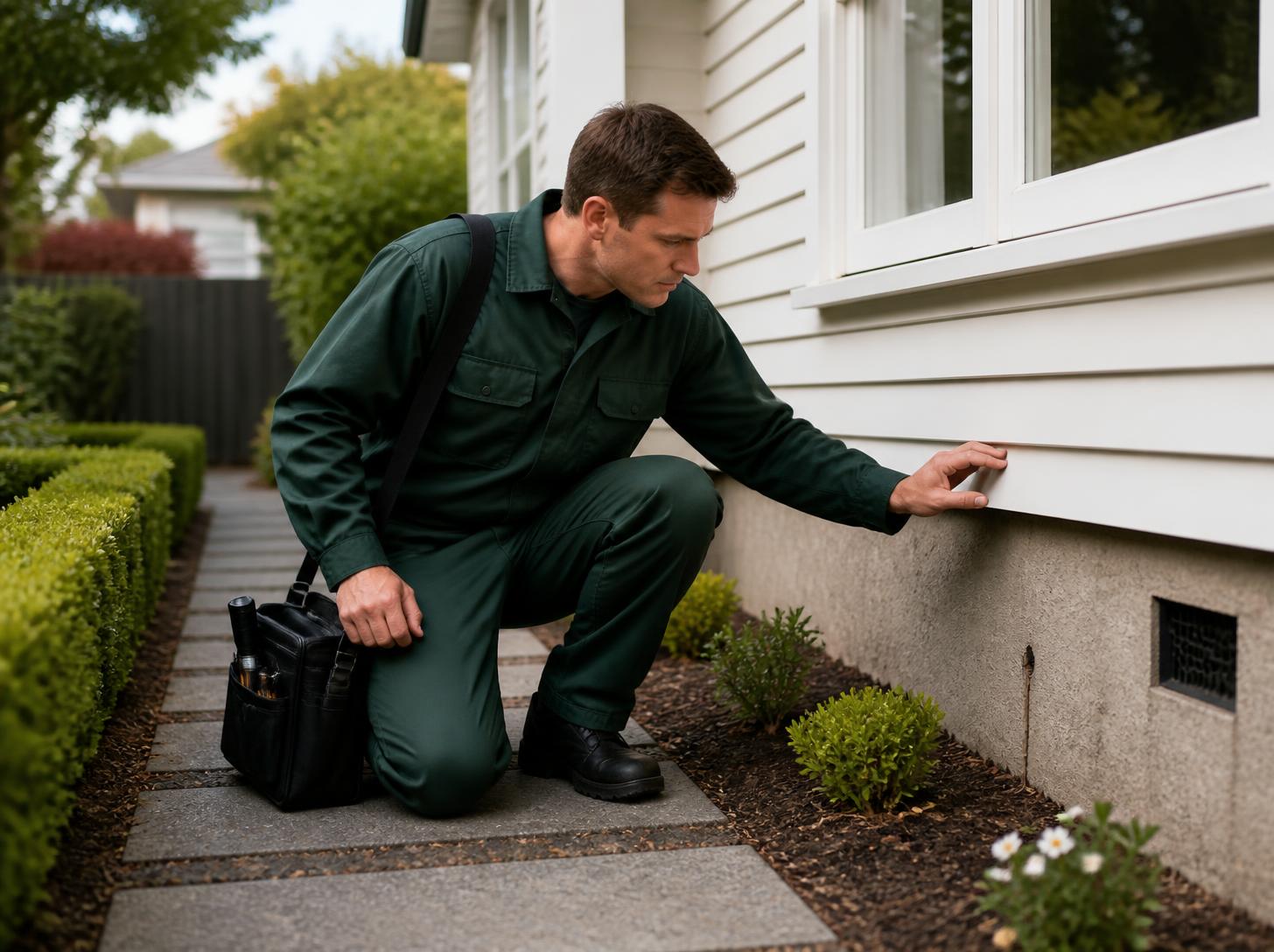
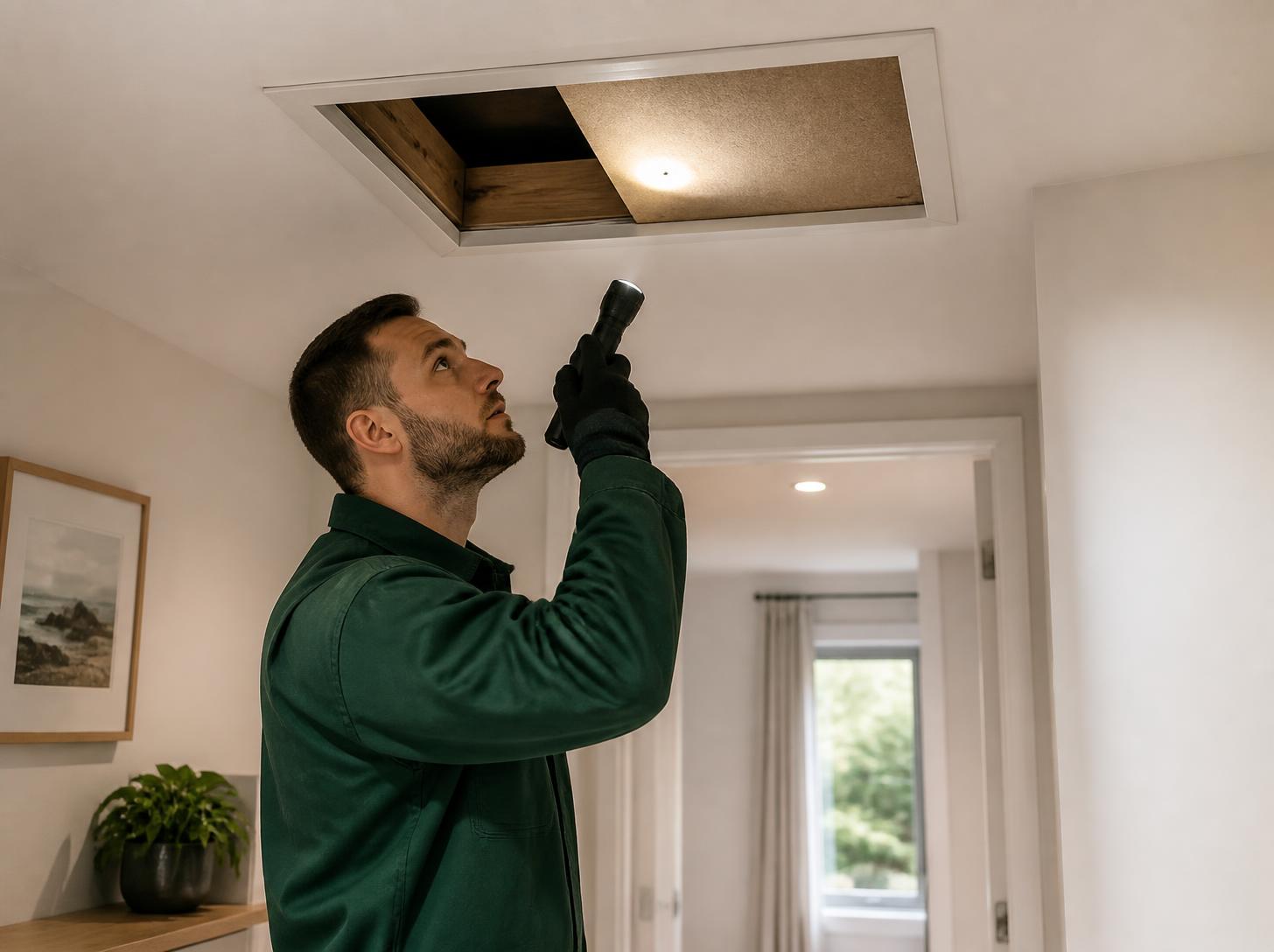
Borer is one of the few household pests where doing it yourself genuinely works, as long as the product goes on the right timber at the right time of year. It also has hard limits. A spray cannot reach larvae deep in a bearer, and an aerosol bomb does nothing to the grubs at all.
This guide rates the options honestly: borer bombs, residual sprays, injecting furniture, and the home remedies people ask about. It also says where DIY stops and professional borer treatment becomes the better use of your money.
Can you treat borer yourself?
Yes, for accessible timber. Bare, unpainted wood you can reach, small pieces of furniture and an enclosed roof space are all realistic DIY jobs if you follow the label and time the work to the flight season. It gets harder in a low subfloor, on load-bearing timber, and whenever you are unsure the borer is still active, because treating old damage wastes money and can miss the real problem.
DIY is reasonable when:
- You have confirmed fresh holes or fresh dust
- The timber is bare and within reach
- It is a single piece of furniture or a small area
- You can get into the roof space safely
Get a professional when:
- You cannot tell whether it is active
- Piles, bearers or joists are affected
- The subfloor is low, wet or hard to crawl
- A floor feels soft, or timber crumbles when probed
Before you buy anything, check the activity. Plenty of people spend a weekend treating flight holes that were made thirty years ago.
Do borer bombs work?
Partly. A borer bomb is an aerosol fogger that fills an enclosed space, usually a roof void, with a fine insecticide mist. It kills adult beetles that are flying or resting on surfaces, and leaves a light deposit behind. It does not reach larvae inside the timber, so it only helps during the flight season, roughly October to March, when adults emerge to mate and lay eggs.
Used that way, a bomb is a useful part of a programme. Killing adults before they lay breaks the next generation, and several seasons in a row gradually wears an infestation down as the larvae already in the wood emerge into it. Used once, in winter, it achieves almost nothing.
Borer bombs are sold in New Zealand hardware stores. If you use one:
- Read the whole label first, including where the product may be used and how long the space must stay closed.
- Use it only in the spaces the label names, such as a roof void or subfloor, and not in living areas unless the label says so.
- Deal with ignition sources. Aerosol propellants are flammable. Follow the label on smoke alarms, pilot lights and naked flames.
- Keep people and pets out until the space has been aired, and wear gloves and a mask if the label calls for them.
Borer sprays and brush-on treatments
Residual borer sprays are the main DIY treatment for bare timber. They are sprayed or brushed onto unpainted wood, such as subfloor framing, the back of weatherboards and roof timbers, and soak into the surface layer. There they kill larvae feeding near the surface and adults chewing their way out, and discourage egg-laying. They cannot soak through paint, varnish or polish.
Consumer NZ describes a residual surface application as the only long-term treatment for borer, and that matches what we see. The better products are designed to penetrate some distance into the wood rather than sit on top.
What chemical kills wood borers? Many retail borer products rely on a synthetic pyrethroid insecticide such as permethrin, carried into the timber in water or a solvent. Kiwicare's "No Borer" range is the one most people have heard of, and it is an example of this type rather than a recommendation over others. Boron compounds are the other main group: they are what H1.2 framing is treated with at the mill. Choose by what the label says the product is for, not by brand.
Apply sprays to clean, dry, bare timber, cover everything the label says to cover, and keep the area ventilated while you work. No product will fix timber that is already structurally weak.
Water-based or solvent-based?
Both types exist. Solvent-based products tend to soak further into dry timber but smell strongly and are unpleasant to use in a cramped subfloor or roof space. Water-based products are easier to live with and are now the more common choice for indoor and subfloor work. Whichever you use, penetration is what matters: the deeper the product goes, the more larvae near the surface it reaches, and the longer the protection lasts. Check the label for how many coats it needs and whether the timber must be bare.
How to treat borer in furniture
First check whether the borer is still active. If it is, inject the flight holes and treat any bare wood. Injection pushes insecticide into the tunnels behind the holes, which is the only way to reach larvae in painted, varnished or polished pieces. Treat unfinished surfaces with a residual spray, keep the piece apart from other furniture, then fill and refinish.
Isolate the piece
Move it away from other wooden furniture, preferably to a garage or well-ventilated room, so emerging beetles have less to reach.
Inject the flight holes
Use a borer injection product with its applicator nozzle, working through the fresh holes as the label directs. Wipe off any excess from finished surfaces straight away.
Treat the bare wood
The back, the underside, drawer sides and bottoms, and the inside of the carcass are usually unfinished. These are where eggs get laid, and where a residual spray can soak in.
Wait and watch
Leave it through the next flight season and look for new holes or fresh dust. None means the treatment has worked.
Fill and refinish
Fill the holes with coloured wax or filler and restore the finish. A sealed surface gives beetles fewer places to lay.
For valuable antiques, talk to a furniture restorer before you inject anything, because some products and solvents can mark old finishes. Crumbling legs or rails need repair, not just treatment.
Heavily infested pieces are sometimes better fumigated by a specialist, who can treat the whole item at once without relying on reaching every hole. That is worth considering for large pieces with dozens of fresh holes, or for furniture with veneers and inlays you do not want to risk. Whatever you choose, keep an infested piece away from floors and other furniture until you are sure it is clear.
Home remedies: kerosene, vinegar and borax
Most home remedies are ineffective or unsafe. Kerosene was traditionally used in New Zealand as a carrier to soak insecticide deep into timber, not as the thing that killed borer, and it is flammable and unpleasant in confined spaces. Vinegar cannot reach larvae inside the wood. Borates are the one remedy with a real basis, since boron protects treated framing, but a surface application is far less thorough.
Kerosene. Kiwicare's own history of borer treatment describes diesel, kerosene and turps being brushed on in the past, ideally with an insecticide added. The solvent's job was to carry the insecticide in. On its own, kerosene is a fire risk in a roof or subfloor, leaves fumes and smells for a long time, and has no reliable evidence of clearing an infestation. We do not recommend it.
Vinegar and essential oils. These are widely suggested online. We know of no evidence that they affect larvae tunnelling inside timber, and nothing sprayed on a surface reaches a larva several centimetres into a joist.
Borax and boric acid. Boron compounds are a genuine timber preservative: H1.2 framing is pressure-treated with them so the sapwood is penetrated completely. Brushing a borate solution onto bare timber at home can give some surface protection, but it will not match factory treatment, and boron washes out of wood that gets wet. Treat it as a preventive measure on bare, dry timber, not a cure for an active infestation.
When to treat borer
Treat before and during the flight season. Apply residual sprays to bare timber in early spring, so they are in place when adults emerge from about October to February, and use aerosols in roof voids while beetles are flying, between October and March. Larvae already in the wood keep emerging for years, so repeat the aerosol each season for a few years and check treated timber every year.
Surface sprays can technically go on at any time of year, and a treatment in winter is better than none. But spring is when it does the most: larvae are active near the surface, and a fresh residual meets the beetles as they come out.
- August to September: inspect, mark old holes, and apply residual sprays to bare timber.
- October to March: aerosol treatment of roof voids and enclosed subfloors while adults are flying, following the label on how often to repeat.
- February to March: check marked areas for new holes and fresh dust.
- Autumn: fix ventilation and moisture problems before winter, and plan next season.
What a professional does differently
A professional confirms activity before treating anything, treats the roof void, subfloor and exterior as one job rather than one spot at a time, and finds the moisture problems that keep borer going. The other difference is judgement about strength: knowing when timber is beyond treatment and needs a builder. That is what you are paying for, more than the products.
In practice that means crawling the whole subfloor rather than the first two metres, getting to the far corners of the roof space, and recording each area as active, historic or clear so the next check has something to compare with. If you want to weigh that against doing it yourself, see what borer treatment costs in Auckland.
Preventing borer
Keep timber dry, sealed and treated. Borer prefers damp, untreated wood, so a dry, well-ventilated subfloor, sound paint on exterior timber and fixed leaks do most of the work. Check second-hand furniture for fresh holes before it comes inside, and use treated timber for repairs: H1.2 for enclosed framing, and a higher hazard class where it will be exposed.
- Subfloor ventilation: keep vents clear of soil, plants and stored junk, and fix any plumbing leaks under the house
- Ground moisture: a polythene ground cover over bare soil keeps a subfloor noticeably drier
- Roof space: fix roof leaks promptly, since damp rafters and sarking are an easy target
- Exterior timber: keep weatherboards and joinery painted, and fill cracks and old flight holes
- Furniture: inspect antiques and second-hand pieces for pale, clean holes and fine dust before they come inside
Ready to have it looked at? Call 09 925 0448 or request an estimate online.
Frequently asked questions
How long does a borer bomb take to work?
It works while the space stays closed, for the time printed on the label, after which the space has to be aired before anyone goes back in. That varies by product, so follow the label rather than a general rule. Remember what it is working on: adult beetles only. Nothing changes inside the timber, so judge a borer bomb over a whole flight season, not over a day.
Are borer bombs safe?
They are safe when used exactly as the label directs. Keep people and pets out during treatment and until the space has been aired, cover or remove food and fish tanks, and follow the label on smoke alarms, pilot lights and naked flames, because aerosol propellants are flammable. Never use one in a living area unless the label allows it. Our guide to pest control safety around pets and children covers the rest.
Does painting over borer holes stop them?
Not the larvae already inside. They keep tunnelling and will chew out through the new paint when they are ready, leaving fresh holes in your new finish. Paint does help against new infestations, because females lay their eggs in cracks, rough surfaces and old flight holes, and a sound paint film seals those off. Treat active timber first, then fill the holes and paint.
Can borer be killed by freezing or heat?
Possibly, for small items, but treat it as a supplement rather than a cure. Extreme cold or heat only kills larvae if it reaches the centre of the wood for long enough, which is hard to be sure of at home, and quick temperature changes can crack veneers, loosen old glue joints and warp timber. For a valuable piece, a furniture restorer or professional fumigation is the safer route.
Do I need to treat the whole house?
No, only the zones that are active. In older houses, though, the roof void and the subfloor are often both involved, because beetles emerging in one space fly to untreated timber in the other. An inspection of the roof space, subfloor, exterior timber and furniture tells you which areas need treating and which only carry old, inactive damage.
How much does DIY borer treatment cost compared with a professional?
DIY costs whatever the products cost: typically a residual spray or concentrate for bare timber, an injection pack for furniture and an aerosol for each roof space, bought again each season. Professional borer treatment in Auckland typically costs $350 to $950 including GST, depending on whether it covers a roof void, a subfloor or a whole house, and it includes confirming whether the borer is still active.