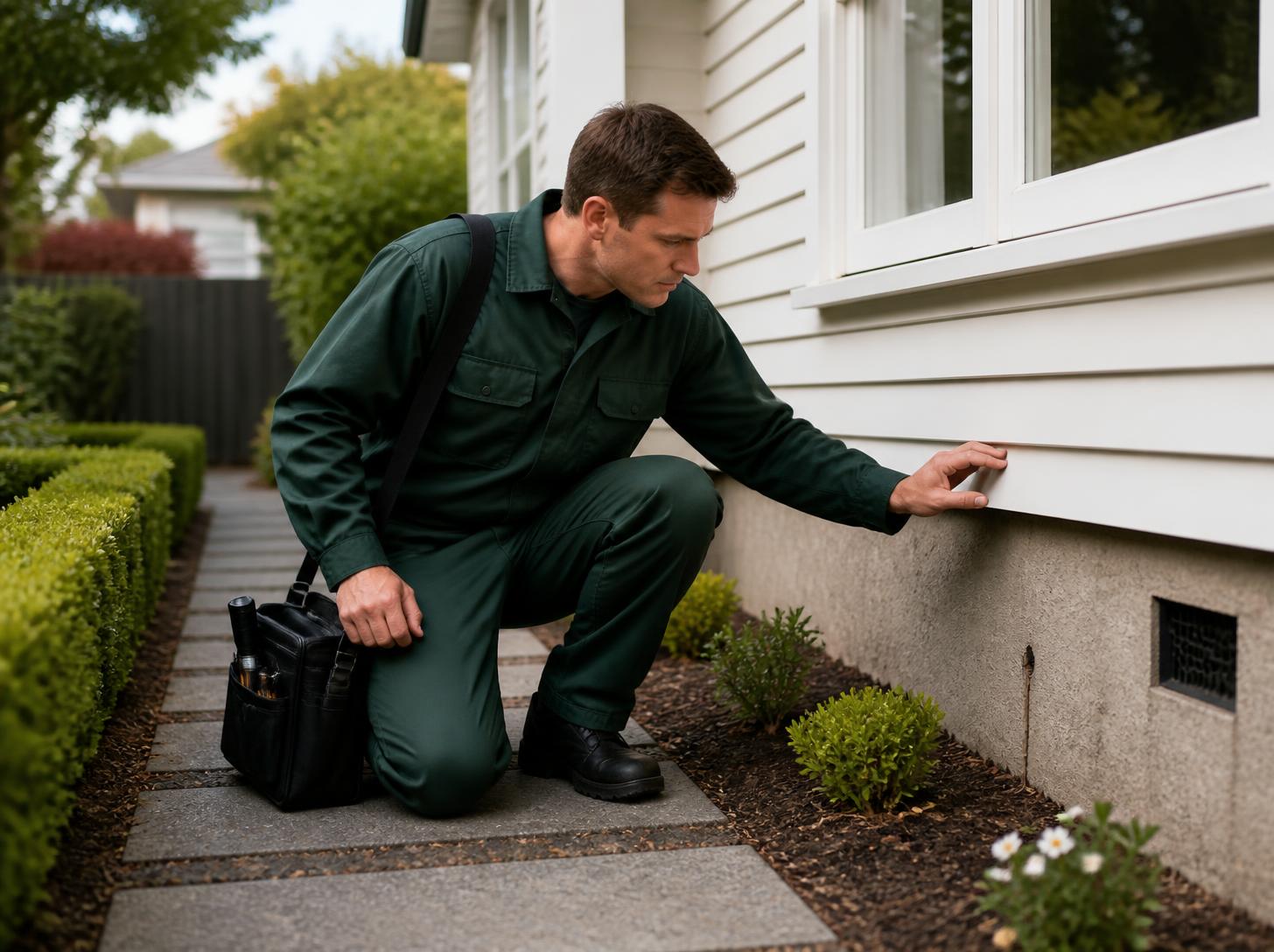
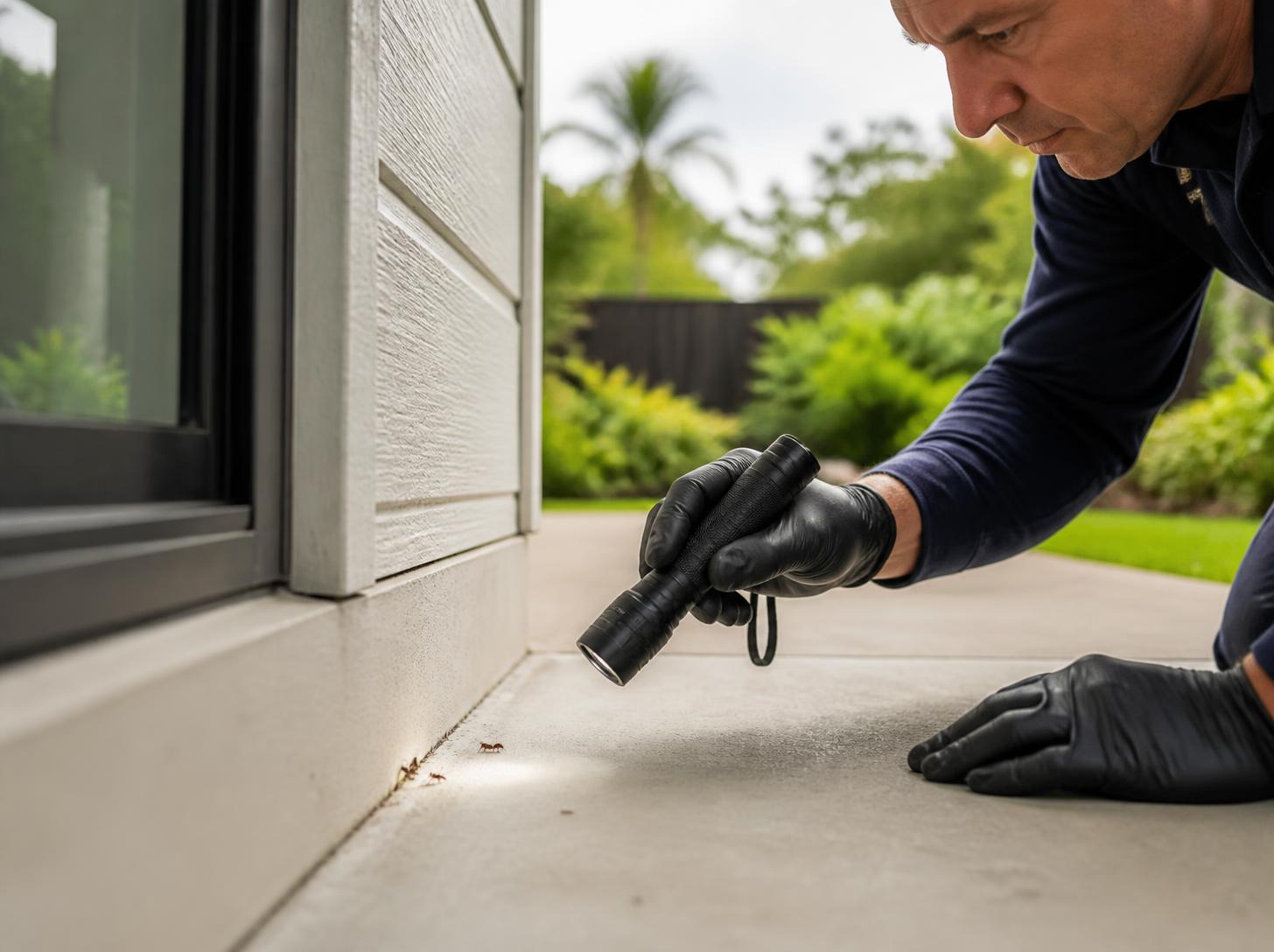
A big, clumsy beetle crashes into the porch light on a summer night. Or you split a log from the woodpile and find it full of fat, pale grubs. Both are huhu, one of New Zealand's best-known native insects. Huhu are harmless to people apart from a nip, and rarely a risk to a house, because they need damp, rotting wood. Small holes and fine dust in your floorboards point to a different insect: the borer that does damage houses.
Here is what huhu are, how they live, whether they bite, and why they sometimes end up indoors.
What is a huhu beetle?
The huhu beetle, Prionoplus reticularis, is a large native longhorn beetle found only in New Zealand. Adults are about 40–50 mm long, brown, with a mottled pattern on the wing cases and long antennae. They fly at night in summer and are strongly attracted to lights. Te Papa describes the huhu as New Zealand's largest beetle.
It belongs to the longhorn family, Cerambycidae, a group of wood-boring beetles named for their long antennae. The huhu is endemic, meaning it lives nowhere else, and it is found throughout the country, from the coast up to about 1,400 m. The grub is known in Māori as huhu, and the adult beetle is also called tunga rere or tātaka.
Up close, the legs and antennae carry small sharp hooks. The Entomological Society notes these can tangle so firmly in hair that the beetle has earned the nickname "haircutter".
What do huhu grubs turn into? The huhu life cycle
Huhu grubs turn into huhu beetles. Females lay eggs in batches on dead wood; the grubs hatch and tunnel through it for two to three years, growing up to about 70 mm long. Each grub then pupates in a chamber inside the wood for about three and a half weeks, and emerges as an adult beetle that does not feed and lives only about two weeks.
Eggs
Laid in groups, cemented together under loose bark, in cracks or between boards. They hatch after about three to four weeks.
Larvae (huhu grubs)
The young grubs bore straight into the wood and feed for two to three years, eating the wood they excavate and packing their tunnels with pellets behind them.
Pupa
A fully grown grub hollows out a cavity in the wood and changes into a pale pupa, which takes a few weeks to become an adult.
Adult beetle
The adult chews out through an exit hole 10–20 mm across, flies at night to find a mate, lays eggs on suitable wood and dies within about two weeks.
This is complete metamorphosis, the same pattern as a butterfly: almost all of the huhu's life is spent as a grub hidden in wood, and the beetle you see at the window is the brief final stage. Adults are out from about November to March, with the largest numbers in midsummer.
Do huhu beetles bite?
They can, but only if handled. Adult huhu have strong jaws that they do not use for eating, and a beetle that is grabbed or trapped against skin may give a sharp nip. It can hurt, but it is harmless: huhu are not venomous and carry no disease. The simplest approach is not to pick them up, and to guide one outside on a sheet of paper.
The mandibles are built for chewing, and the adult never uses them to feed. Children who like to catch insects are best shown how to scoop a huhu into a container rather than hold it. If a bite breaks the skin, wash it as you would any small scratch.
What to do with a huhu in the house
Turn off the inside lights, leave the door open with a light on outside, and give it a few minutes. If it has landed somewhere awkward, slide a sheet of card under it or put a container over it, and carry it out to the garden, ideally near a log or tree. There is no need for insect spray, and killing it achieves nothing: another will fly in on the next warm night while the porch light is on. Drawing the curtains after dark in summer keeps lit rooms from drawing them in the first place.
Where huhu live, and what they eat
Huhu grubs eat dead wood. They live in logs, stumps, dead branches and fallen trees, in native bush and pine plantations alike, and turn up in firewood stacks and untreated timber left lying outside. They need wood that is damp, and many are found in timber that has started to rot. The adult beetles do not eat at all.
The NZ Farm Forestry Association lists native softwoods, exotic softwoods, particularly radiata pine, and partly decayed hardwoods among their hosts. In the bush, huhu are part of the clean-up crew: by chewing through dead wood they speed up its breakdown and return its nutrients to the soil. In suburban Auckland you are most likely to meet them in an old stump, a pile of garden logs or the woodpile by the back door.
Do huhu beetles damage houses?
Rarely. Huhu grubs need wood with a high moisture content, and the NZ Farm Forestry Association notes that larvae in preservative-treated timber die soon after they start boring. The dry, treated or painted timber of a sound house does not suit them. The exception is timber that is already damp or rotting, and that points to a leak or moisture problem that needs fixing anyway.
This is the key difference from the common house borer, Anobium punctatum, which is perfectly happy in dry, untreated timber and does most of the insect damage found in New Zealand houses. A huhu flying into the lounge in January tells you nothing about the state of your floors. Tiny round holes and fine gritty dust in floorboards, skirting or the roof space are a different matter, and worth investigating.
Huhu occasionally do turn up in building timber, but the circumstances are telling. The NZ Farm Forestry Association records them in untreated sawn timber, and the grubs need that timber to stay wet. If you find large oval holes or a fat grub in a deck joist, a rotting windowsill or a bearer sitting on wet ground, the real problem is the water. Get the leak or drainage fixed, and have a builder look at the rot. The huhu is a symptom rather than the cause.
Huhu grubs as food
Huhu grubs are a traditional Māori food, eaten raw or cooked. Te Papa calls them "delectable wild food", and the Entomological Society notes they were a traditional food source for many iwi. They remain one of the few insects with a long place in New Zealand cuisine, and researchers have studied their food value as a native edible insect.
Their place in kai traditions reflects detailed knowledge of the bush: where the grubs are found, which logs hold them, and when they are at their best. That knowledge belongs to the people who carry it, and this page is not a guide to gathering or preparing them.
Huhu vs house borer: a quick comparison
Huhu and house borer are both wood-boring beetles, but they differ in almost every way that matters to a homeowner. Huhu are large, live in damp dead wood outdoors and leave exit holes up to about 20 mm. House borer are tiny, attack dry untreated timber indoors and leave round holes 1–2 mm across.
| Huhu beetle | Common house borer | |
|---|---|---|
| Adult size | About 40–50 mm | About 2.5–5 mm |
| Grub size | Up to about 70 mm | A few millimetres |
| Exit holes | Oval, 10–20 mm | Round, 1–2 mm |
| Wood it needs | Damp, dead or rotting: logs, stumps, firewood | Dry, untreated sapwood: floorboards, framing, furniture |
| Adults fly | About November to March | About October to February |
| Damages sound houses? | Rarely | Yes, over years |
Found small holes instead?
If what you have found is small round holes and little piles of fine dust in your floors, stairs or roof space, that is not huhu. It is almost certainly the common house borer, and it is worth finding out whether it is still active before deciding anything. When it is, we can help with borer treatment in Auckland, from an inspection that separates old damage from new through to treatment timed to the flight season.
Call 09 925 0448 or request an estimate online.
Frequently asked questions
Is a huhu beetle a moth?
No. The huhu is a beetle, not a moth. People call it a "huhu moth" because it flies at night, blunders into lights and makes a loud whirring buzz, all things we associate with moths. Look closely and you will see hard brown wing cases folded over the flight wings, long antennae and strong jaws, none of which a moth has.
Are huhu beetles harmful to humans?
No. Apart from a nip if you handle one roughly, huhu beetles are harmless. They are not venomous, do not sting, carry no disease and do not infest homes or food. The hooked spines on their legs and antennae can cling to clothing and hair, which is startling but not dangerous. Adults do not eat and live only about two weeks.
Why do huhu beetles fly into lights?
Adults fly at night in summer, from about November to March, with most around in December and January, and they are strongly drawn to artificial light. That is why they crash into porch lights and lit windows. Te Papa suggests a simple fix when one gets inside: switch the inside lights off, leave an outside light on and open the door, and it will usually find its own way out.
Are huhu beetles protected?
Not specifically. The huhu is not among the invertebrates listed for protection in Schedule 7 of the Wildlife Act 1953, and it is common throughout New Zealand. It is still a native insect doing a useful job, breaking down dead wood, so there is no reason to kill one that has wandered inside. Carry it back outside instead.
Can huhu grubs live in firewood inside the house?
Yes, for a while. Grubs already in a log can survive in a firewood box, and occasionally an adult emerges indoors, especially in summer. They are no threat to the house, because the dry timber of a sound building does not suit them. If it bothers you, store firewood outside or in a shed and bring in only what you will burn within a few days.
How big do huhu grubs get?
Fully grown huhu grubs are up to about 70 mm long, according to Manaaki Whenua Landcare Research, and Te Papa gives a range of 50–75 mm. They are pale, soft-bodied and fat, with strong jaws for chewing wood. They reach that size after two to three years of feeding inside dead wood, which is why the biggest are found in large, well-rotted logs.
- Te Papa — huhu beetle (Prionoplus reticularis) or tunga rere
- Manaaki Whenua Landcare Research — huhu beetle
- Manaaki Whenua Landcare Research — huhu grub
- Entomological Society of New Zealand — Bug of the Year: huhu beetle
- NZ Farm Forestry Association — huhu beetle
- New Zealand Legislation — Wildlife Act 1953