Silverfish are small, wingless, silvery-grey insects that run fast, hide by day and feed on paper, glue, starch and some fabrics. They are common in New Zealand homes, they do not bite or carry disease, and a few in the bathroom are normal. They become a problem when they are eating stored papers, books or clothes, and the fix is mostly about moisture, clutter and hiding places rather than spray.
What kind of bug is called a silverfish?
A silverfish is a primitive wingless insect from the order Zygentoma (formerly Thysanura). It has a flat, carrot-shaped body that tapers from the head to the tail, a coat of fine silver or grey scales, two long antennae and three long tail filaments. Adults are roughly 8 to 20 mm long, and they move with a quick, wriggling run that looks like a small fish swimming.
The species you are most likely to find in an Auckland house is the grey silverfish, also called the long-tailed silverfish (Ctenolepisma longicaudatum). Its tail filaments and antennae are each about as long as its body. Professional Pest Manager NZ notes that a large adult over 1.5 cm is probably more than two years old. A close relative, the firebrat, is duller and grey-brown and prefers hot places such as around ovens, hot-water cylinders and boiler rooms.
Their scales rub off easily. If you squash one and see a silvery smear, that is the scales, not blood.
Are silverfish in New Zealand, and where do they come from?
Yes, silverfish are well established in New Zealand homes, and most infestations are old ones. Silverfish are slow breeders: a female lays roughly 100 eggs over her life, a few at a time in cracks, and the young take months to mature. Ohio State University's fact sheet says a large infestation usually means a long-standing one. They also travel in second-hand furniture, cardboard boxes and stored books and papers.
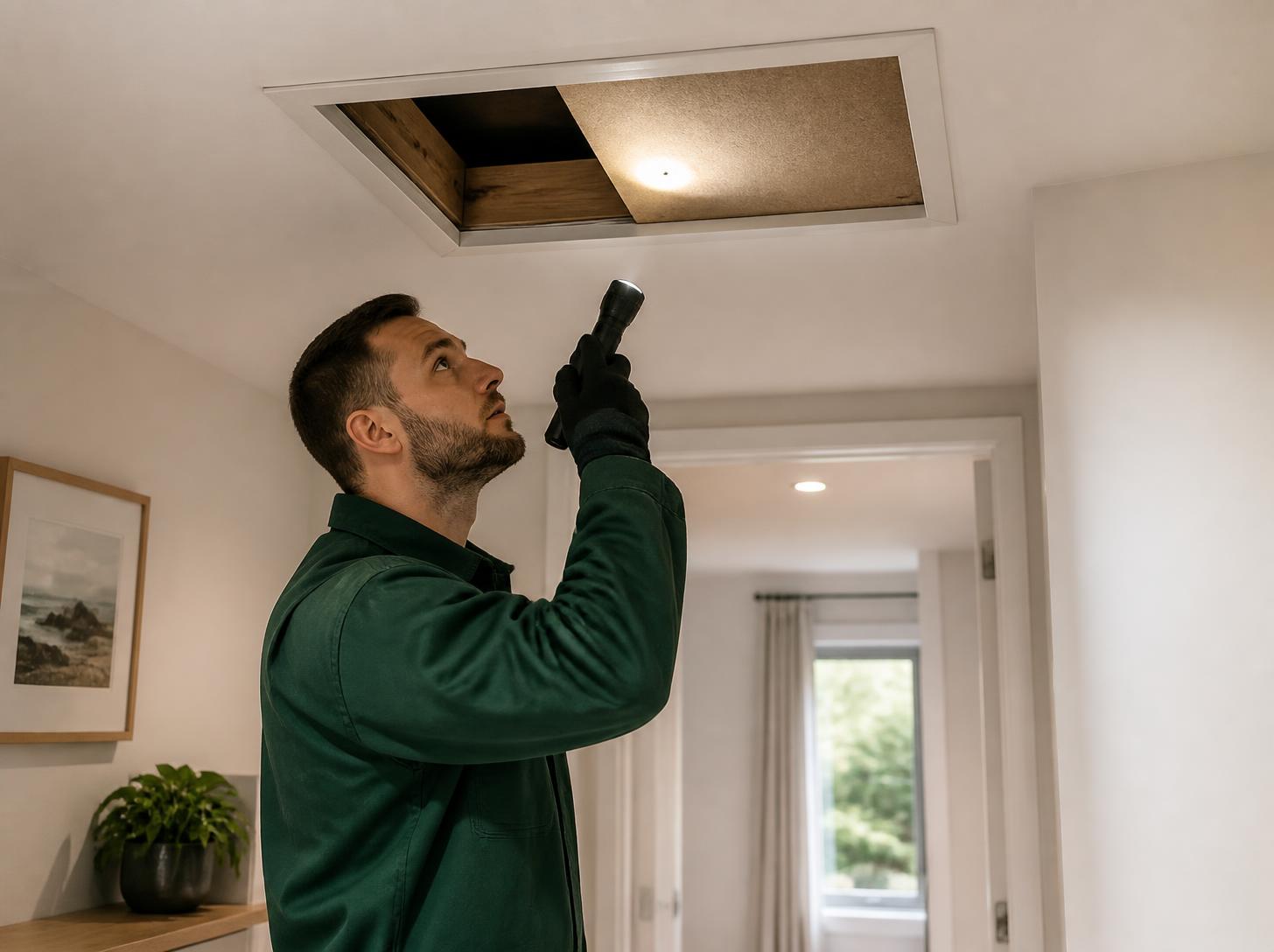
Inside the house they hide in dark, undisturbed places: behind skirting boards, inside wardrobes and drawers, in bookshelves, behind loose wallpaper, in cracks around baths and vanities, and in the subfloor and roof space. The pest manager's guide notes they tolerate a wide range of temperatures, living in cool, damp subfloors and in hot, dry roof voids alike. That is why they often appear in bathrooms through gaps around downlights.
What do silverfish eat?
Silverfish eat carbohydrates first, especially starch and cellulose, and add protein when they find it. Ohio State lists glue, wallpaper paste, book bindings, paper, photographs, starch in clothing, cotton, linen and rayon fabrics, flour, cereals, dried meats, leather and even dead insects. Their mouthparts are small, so they scrape at a surface, leaving thinned patches that eventually become holes with uneven edges.
Sources differ on animal fibres. A New Zealand pest manager's guide says silverfish will eat wool and silk, while an Australian entomologist writing in The Conversation says they leave wool, silk and fur alone unless food has been spilled on them. In practice, a hole in a clean woollen jersey is far more likely to be a clothes moth (see below), while damage to cotton, linen, starched collars and paper points to silverfish.
They do not drink. Silverfish absorb moisture from the air, which explains why humidity matters so much to them, and why a damp house can support far more of them than a dry one.
Can silverfish climb walls?
Silverfish can climb rough surfaces such as timber, paper, fabric and textured walls, which is how they get up into wardrobes, bookshelves and ceilings. They cannot climb smooth, slippery surfaces. Their feet end in simple claws without the pads other insects use on glass, so a silverfish that falls into a bath, basin or sink usually cannot get out again. That is why the bath is where most people first see one.
Finding one trapped in the bath in the morning does not mean it came up the plughole. It almost always dropped in from a gap around the ceiling, a downlight or the edge of the bath during the night.
Should I be worried if I find a silverfish in my house?
One silverfish is not a reason to worry. They are harmless to people and pets: they do not bite, do not sting and are not known to spread disease. A few around the bathroom or laundry is normal in an older New Zealand house. What matters is the damage they can do to things you care about, and whether the numbers say there is a much larger population hiding somewhere.
Because they are nocturnal and hide during the day, the ones you see are only part of the picture. The NZ pest manager's advice is that if you find one, there are more than likely many more nearby.
How many silverfish are a problem?
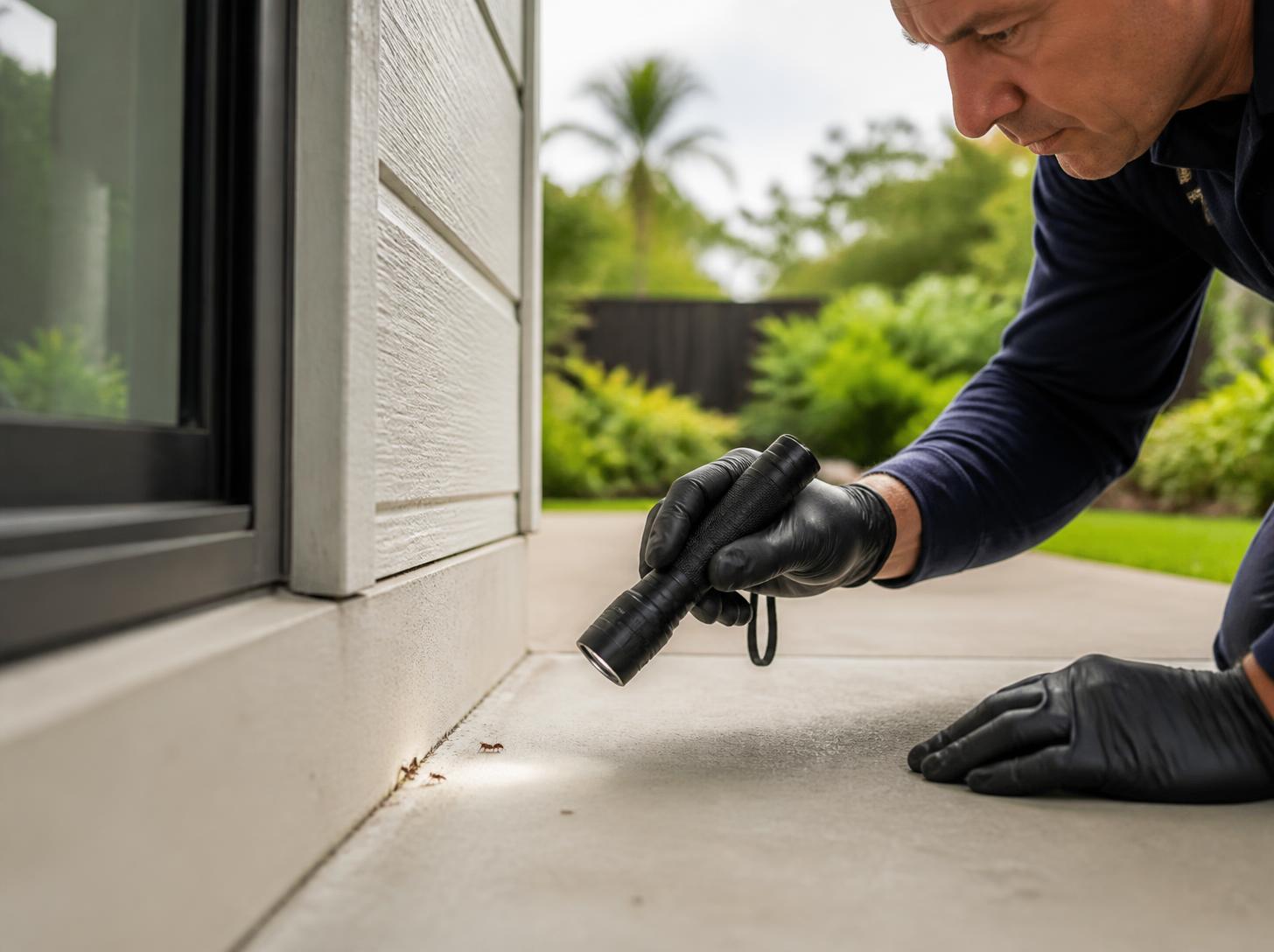
There is no official threshold, but a useful rule is this: the odd one every few weeks is background, while seeing them several times a week, finding them in several rooms, or finding damage is a real infestation. The most reliable signs are scraped or holed paper and book covers, yellowed patches on fabric or paper, tiny pepper-like droppings, and fine silver scales on shelves. Because silverfish build up slowly, steady sightings usually mean an established population.
A cheap way to measure it is a sticky trap. Put two or three in a wardrobe, a bookcase and the bathroom for a week. A trap with one or two silverfish is a low level. Traps that keep filling, or catches in rooms well away from the bathroom, mean it is time to deal with the source.
Is it safe to sleep in a room with silverfish?
Yes. Silverfish are not interested in people, cannot bite through skin and are not known to transmit any disease, so sharing a bedroom with a few does you no harm. The concern in a bedroom is the wardrobe rather than the bed: cotton and linen clothes, starched shirts, shoe boxes and stored papers. If you are getting bites at night, look for another cause, starting with bed bugs or fleas.
Silverfish or clothes moths: which bug is eating your clothes?
The two common bugs that eat clothes in New Zealand homes are clothes moths and silverfish, and they eat different fabrics. Clothes moth larvae feed on keratin, the protein in wool, fur, feathers and hair, so they go for woollen jumpers, carpets and felt. Silverfish go for plant-based and starched fabrics such as cotton, linen and rayon. Pure synthetics are rarely eaten by either.
| Silverfish | Clothes moths | |
|---|---|---|
| What does the damage | Nymphs and adults, which look alike | Only the larvae; the University of Florida and Rutgers note the adult moths do not feed |
| Favourite fabrics | Cotton, linen, rayon, starched fabric, plus paper and glue | Wool, fur, feathers, felt, silk and wool carpet |
| What the damage looks like | Scraped, thinned patches with uneven edges, often with yellowish staining | Small holes scattered over a garment, often in hidden areas such as under collars |
| Other signs | Silvery scales, tiny dark droppings, the insects themselves at night | Silk webbing or feeding tubes mixed with droppings (webbing clothes moth) or small portable cases (case-bearing moth) |
| What you see moving | Fast, wriggling, wingless insects | Small buff or golden moths that flutter weakly and avoid light |
So, do moths eat clothes? The moths themselves do not. The damage is done by the small, creamy-white larvae, which hatch from eggs laid directly on the fabric and feed out of sight in dark, undisturbed parts of a wardrobe. The University of Florida's guide describes webbing clothes moth larvae as staying in one area and feeding under a tube of silk and droppings. Pantry moths are a separate problem: they lay in flour, cereal and dried fruit, not clothes.
How do you get rid of silverfish?
Getting rid of silverfish means taking away the damp, the food and the hiding places, then dealing with the ones left. Lower the humidity, clear out old cardboard, newspapers and stored paper, move documents into sealed plastic tubs, vacuum the cracks and shelves they use, and monitor with sticky traps. Ohio State's fact sheet notes that insecticides are generally not needed for light infestations.
- Dry the house out. Fix dripping taps and leaks under vanities and in the laundry, run the bathroom extractor fan, ventilate wardrobes against outside walls and use a dehumidifier where the air stays damp. In an older Auckland villa, check the subfloor for ground moisture as well.
- Remove the food and the cover. Old newspapers, magazines and cardboard boxes are both food and shelter. Recycle what you do not need, and store books, papers and photographs in sealed plastic containers, especially in the subfloor, garage or roof space.
- Empty and clean the hiding places. Take everything out of affected drawers and wardrobes, vacuum the corners, cracks and shelf edges, and wash cotton and linen clothes at the hottest temperature the care label allows.
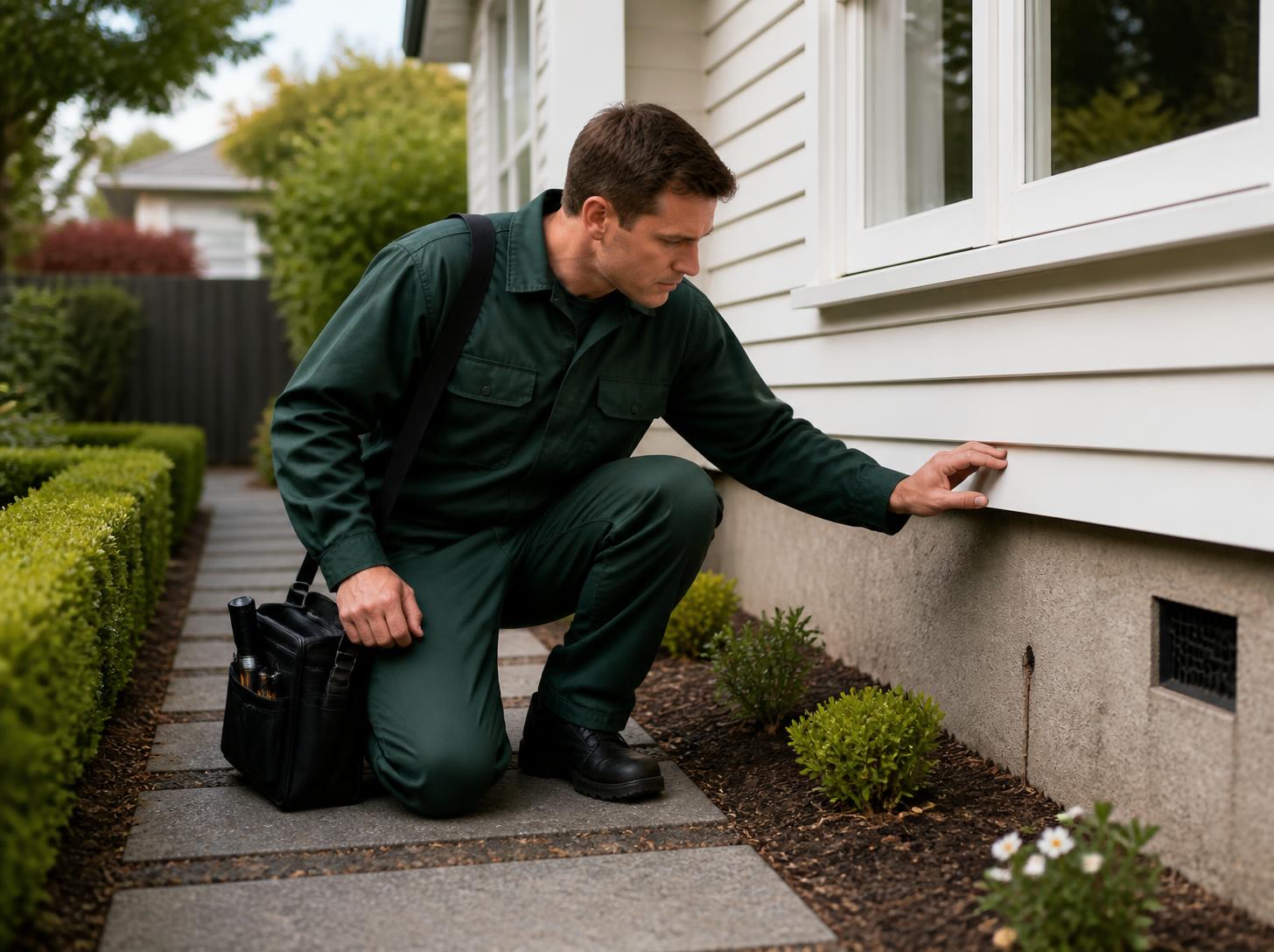
- Seal the gaps. Caulk gaps along skirting boards, around bath and vanity edges and where pipes come through walls. This removes daytime hiding spots close to their food.
- Trap and monitor. Sticky traps catch silverfish and show you where the activity is. The Conversation article notes they can be baited with a few rolled oats.
- Treat only where needed. Silverfish are fairly susceptible to household insecticides. For a heavier problem, a residual crack-and-crevice treatment or an insecticide dust in the roof void and wall cavities reaches where they actually live. Use only products approved for the purpose and follow the label.
Expect it to take a couple of weeks before sightings drop, and longer if the population is large or sits in the roof space. Treating the visible insects without fixing the damp and the clutter is why silverfish so often seem to come back.
When a professional treatment makes sense
A professional treatment is worth it when the silverfish are in the roof space or subfloor, when they keep reappearing after you have dried and decluttered, or when they are damaging something valuable such as books, archives or a collection. Treating the voids, where most of the population hides, is the part that is hard to do yourself. It is usually done as part of a whole-home pest treatment, alongside the spiders and other insects that share the same voids (see spider and fly control).
If you are not sure what you have found, compare it with our guides to flies in the house and termites and flying ants, or send a photo when you request an estimate. If you want to know which insects turn up in which season, the Auckland pest calendar covers the year month by month. For anything else, call 09 942 7141.
Frequently asked questions
Are silverfish common in New Zealand?
Yes. Silverfish are found in homes throughout New Zealand, Auckland included. The grey or long-tailed silverfish, Ctenolepisma longicaudatum, is the species most people find, and it is the most common house silverfish in most countries. They live quietly in roof voids, subfloors, wardrobes and bookshelves, so many households have a few without ever seeing one.
Do silverfish bite?
No. Silverfish do not bite, sting or spread disease. Their mouthparts are small and built for scraping starch off paper and fabric, not for piercing skin. If you are waking up with bites, silverfish are not the cause; fleas and bed bugs are the usual suspects, and they leave a quite different pattern of marks.
Where do silverfish come from?
Most were already in the house, often for years. Silverfish breed slowly in undisturbed spots such as roof voids, subfloors, stored cardboard boxes, old books and the backs of wardrobes, and they arrive in second-hand furniture, boxes and stored paper. Seeing more of them usually means a long-standing population has been disturbed or the house has become damper, not that they have just moved in.
Can silverfish damage my house?
Not its structure. Silverfish do not eat framing timber the way borer can. The damage is to contents: they scrape and eventually hole paper, book bindings, photographs, wallpaper and its paste, cardboard, starched cotton and linen, and dry foods such as flour and oats. Stored documents and boxed books in a damp subfloor or hot roof space are the things most often ruined.
Do silverfish mean my house is damp?
Often, but not always. Common silverfish do best in high humidity, around 75 to 95 percent relative humidity according to Ohio State University's fact sheet, which is why bathrooms, laundries and subfloors are favourite spots. The grey silverfish is more tolerant of drier air and is also found in hot, dry roof voids. A sudden increase indoors is still a good prompt to check for leaks and poor ventilation.
Need it dealt with rather than read about? See how Auckland pest control works: we inspect first and give you a written price before any treatment starts.
- Ohio State University Extension, ENT-64: Silverfish and firebrats
- Professional Pest Manager NZ: Silverfish in New Zealand
- The Conversation (Graeme Smith, Federation University): Hidden housemates, book-loving silverfish
- University of Florida IFAS Extension, IG090: Clothes moths
- Rutgers NJAES, FS1182: Clothes moths
- Manaaki Whenua Landcare Research: What is this bug?
- EPA New Zealand: insecticides and pesticides at home