Auckland's rodent year is predictable. Activity indoors climbs from March, peaks through April and May, and is driven by two things: outdoor food supply collapsing and night temperatures dropping.
Which means the useful work happens in February and March — before they arrive, not after. Six or seven hours spent in late summer prevents most of the problems that generate winter call-outs, and makes any rodent treatment you do need smaller and more likely to hold.
The two numbers that matter
Gap sizes
A rat gets through a gap of about 12 mm. A mouse gets through about 6 mm — roughly the width of a pencil. Both can enlarge an existing gap by gnawing, so a small hole or crack in a soft material will not stay small.
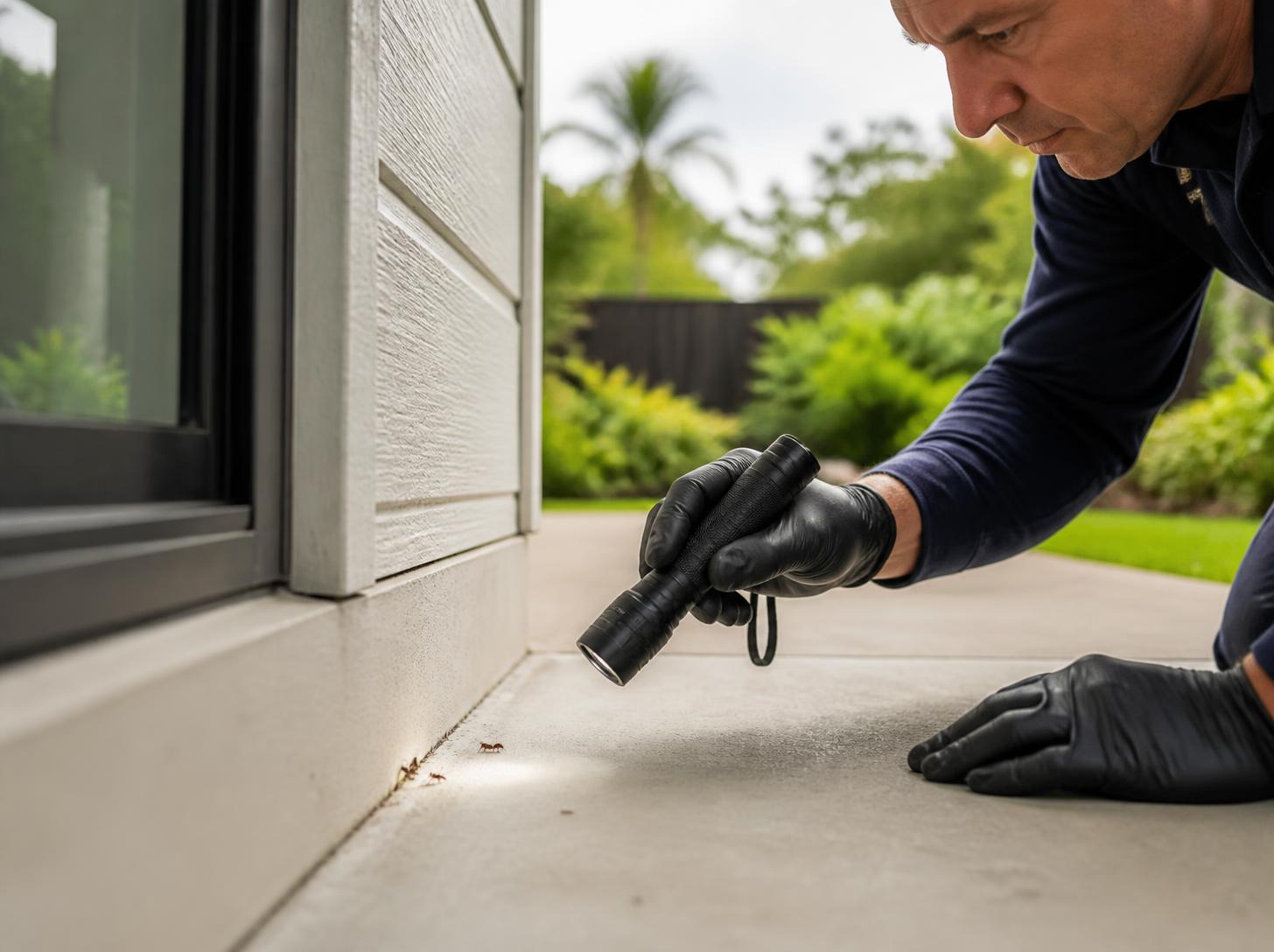
Carry a pencil when you do your inspection. If it fits into a gap, crack or entry point, a mouse can use it, and anything twice that size is open to rats.
Start with the highest-value job: vegetation
If you do only one thing, do this. It is free, it takes an afternoon, and it removes the single most common ship rat entry route in Auckland.
- Cut all branches back at least a metre from the roofline. Ship rats jump roughly a metre horizontally, so touching the roof is not required — being close is enough.
- Clear climbing plants off walls. Ivy, jasmine and star jasmine on a wall is a ladder with handholds.
- Trim hedges back from the building. A hedge against a wall provides continuous covered access along the whole length of it.
- Check the fence line. Fences are rodent highways. Where a fence meets the house, look at what it connects to.
On bush-edge properties in Birkenhead, Glenfield and Henderson, this one job frequently makes more difference than any treatment.
Then work the building envelope
Roof level
- The roof-to-wall junction. Where the roof meets the top of the wall, behind the fascia or under the bottom course of tiles. This is the most common ship rat entry we find in Auckland. Look for daylight from inside the roof space.
- Soffit and eave linings. Check for warped, dropped or damaged panels, and gaps where the lining meets the wall.
- Where pipes and cables enter. Vent pipes, aerial cables, solar cabling, air conditioning lines — all frequently left with a gap around them.
- Ridge caps and flashings. Lifted or corroded flashing creates a gap you cannot see from the ground.
Ground and subfloor level
- Subfloor vent grilles. The big one on older Auckland housing. Salt air corrodes steel mesh, particularly in Devonport, Takapuna and around the harbour edges. Replace corroded grilles with galvanised or stainless mesh — never simply block them, because subfloor ventilation prevents moisture problems. A damp subfloor also invites borer in subfloor timber, so good airflow protects the framing as well.
- Subfloor access hatches. Check they close properly and latch.
- Gaps under external doors. Fit or replace draught seals. A 15 mm gap under a garage door is a wide open invitation.
- Where services enter the wall. Water, waste, gas and electrical penetrations, especially where a renovation cut a new one.
- Weep holes in brick veneer. These must stay open for drainage, but can be fitted with proprietary weep hole covers that let water out and keep rodents from getting in.
- Gully traps. Check the seal is intact and the grate sits properly. A failed gully trap is a classic Norway rat route into a building, common in Pakuranga and Onehunga.
Use the right materials
Expanding foam does not stop rats. Neither does plastic, untreated timber or silicone sealant on its own. Rats gnaw through all of them. Foam is fine as a backing or air seal, but it needs a gnaw-resistant layer on the exposed face.
| Gap type | Use | Avoid |
|---|---|---|
| Small gaps and pipe penetrations | Stainless steel wool packed tight, sealed over | Expanding foam alone |
| Vents needing airflow | Galvanised or stainless steel mesh, max 5 mm aperture | Plastic mesh; blocking entirely |
| Larger structural gaps | Sheet metal, cement mortar, hardboard backed with mesh | Timber offcuts, cardboard |
| Under doors | Metal-backed draught seals or door sweeps | Rubber-only strips |
| Weep holes | Proprietary weep hole covers | Mortar — blocks drainage and causes moisture problems |
Remove the reasons they want to be there
Sealing is half of it. The other half is not running a buffet.
- Store pet food, bird seed and pantry staples in sealed containers (good food storage is half of rodent-proofing), and do not leave bowls out overnight
- Use a compost bin with a secure lid, or a tumbler — open compost heaps are a rodent food source and a warm nest site
- Pick up fallen fruit. A productive feijoa or plum tree in autumn is a significant food source right when rodents are looking
- Secure rubbish bins; make sure lids close fully
- Clear the birdfeeder overnight, or accept the trade-off
- Move woodpiles away from the house and up off the ground
- Clear long grass, dense ground cover and debris from against the foundation line
- Fix leaking taps and drips — rodents need water as much as food
Inside: reduce the harbourage
- Declutter the garage and any storage areas — stacked cardboard boxes are ideal nesting material
- Store items in sealed plastic tubs rather than boxes
- Keep a clear gap between stored items and walls, so runs are visible
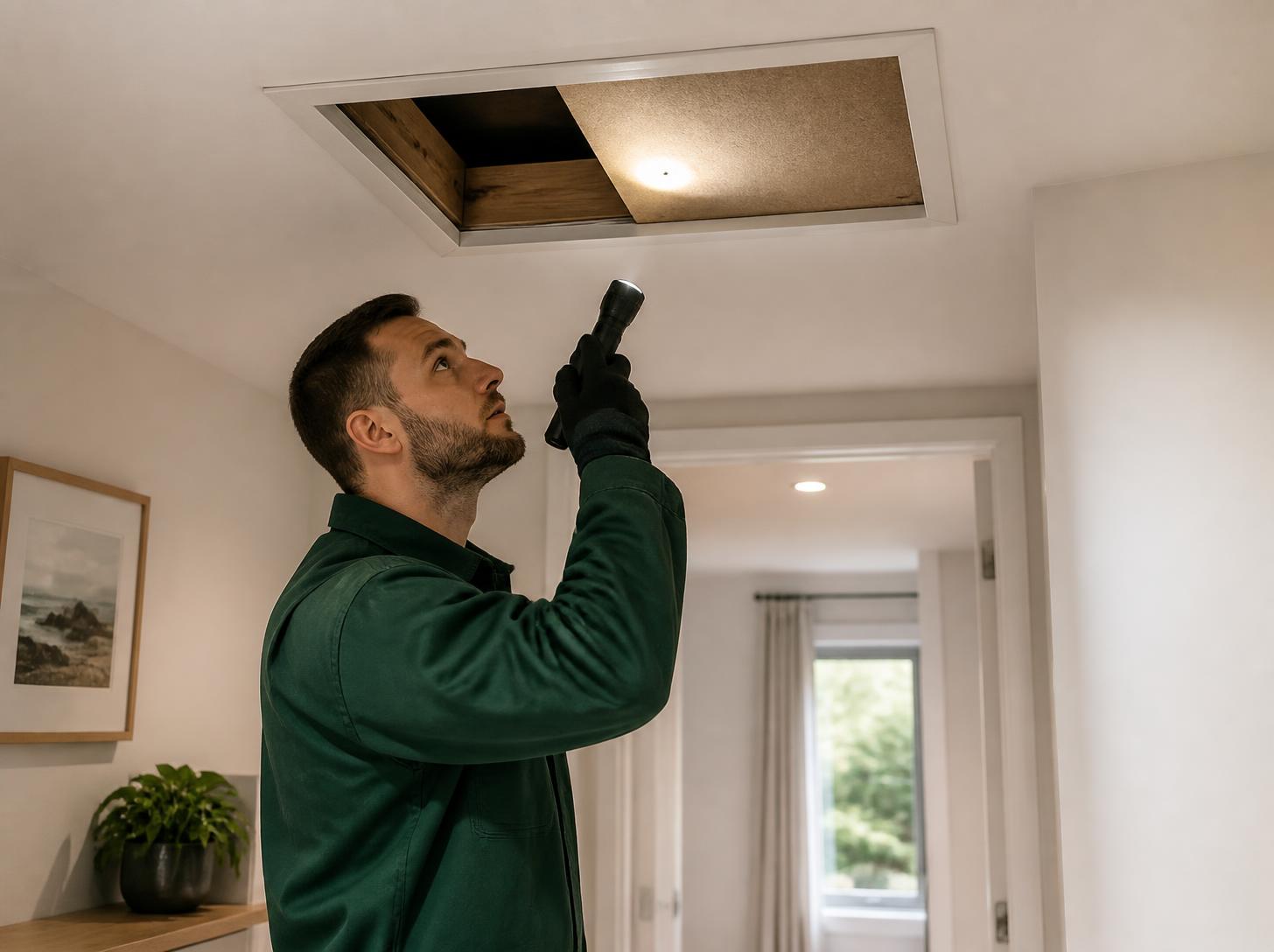
- Check the roof space and subfloor once a year, in late summer, before the season starts
The order matters
If rodents are already inside, treat first, then seal. Sealing a building with an active population inside traps them in rather than out — which produces exactly the problem you were trying to avoid, plus the odour of animals dying in cavities. Remove the population, confirm activity has stopped, then close the building up.
If you have no current activity, sealing alone is genuinely preventive and may be all you ever need. If you do have activity and want to deal with it yourself, our guide to rat and mouse traps and bait covers what works and where to put it.
An honest note on bush-edge properties
If you back onto reserve, bush, a gully or a tidal margin — a large share of the North Shore and West Auckland — you cannot eliminate the source. The reservoir is next door and permanent.
What you can do is make the building genuinely hard to enter and maintain an external line. That is a completely achievable goal and it is what a well-run maintenance programme delivers. What is not achievable is permanent eradication, and it is worth being sceptical of anyone who offers it.
Your February checklist
Walk the perimeter with a pencil
Every gap it fits into goes on the list.
Get into the roof space and under the house
Look for daylight, droppings and smear marks. Wear a P2 mask and gloves.
Cut vegetation back a metre from the roof
The highest-value hour you will spend.
Seal, using gnaw-resistant materials
Steel wool, metal mesh, sheet metal, mortar.
Remove food and water sources
Compost, pet food, fallen fruit, drips.
Book an inspection if you find evidence
Existing activity needs treating before you seal.
If you would rather someone else did the finding, our rodent control service includes a full inspection and a written, prioritised proofing list — which you are welcome to action yourself.
Frequently asked questions
What size gap can a rat get through?
Smaller than most people expect. University of California IPM advisers put it at about 12 mm for a rat, and about 6 mm, roughly the width of a pencil, for a mouse. Both can enlarge an existing gap by gnawing, so a small hole in a soft material does not stay small. If you can push a pencil through a crack or entry point, treat it as open to mice.
When should I rodent-proof my house in Auckland?
February and March. Rodent movement indoors climbs from March and peaks in April and May, so sealing work done in late summer prevents the problem rather than responding to it. Sealing a building in June, once rodents are already nesting inside, is harder and less effective.
Does expanding foam stop rats?
No. Rats gnaw straight through expanding foam, and through plastic, timber and soft sealants. Use stainless steel wool, galvanised steel mesh, sheet metal or cement-based filler. Foam is fine as a backing material or air seal, but it needs a gnaw-resistant layer on the exposed side.
Will cutting back trees really make a difference?
Yes, more than almost anything else. Ship rats are excellent climbers and travel through canopy, entering at roof level where a branch touches or comes within about a metre of the roofline. Cutting vegetation back from the roof removes the route entirely, and it is free.
Do I still need treatment if I seal everything?
If rodents are already inside, yes — sealing traps them in rather than out. The correct order is to treat and remove the population first, then seal. If you have no current activity, sealing alone is genuinely preventive and may be all you need.
What is the 5-day mouse rule?
It is a rule of thumb from the pest control trade, not an established fact, and it comes in two versions. One says that if you see no new signs of mice for five days in a row, they have gone. The other says that if you are still catching mice after five days, you need a professional. Neither is backed by research. Fresh droppings, gnawing and noise are a better guide than any day count.
What repels rats immediately? What do rats hate most?
Nothing reliably. Peppermint oil, ammonia, mothballs and ultrasonic plug-ins are sold as instant repellents, including for night-time activity, but extension research finds little or no evidence they work, and rats get used to them. What rats genuinely avoid is exposure: open ground, light and a house with no way in. Removing cover and food around the house and sealing gaps does more than any product.
How many rats do you have if you see one?
There is no reliable ratio, and anyone quoting one is guessing. A single sighting tells you rats are established nearby. The signs tell you the scale: droppings in several places, well-worn smear marks and noise from more than one area point to a population. Our rodent control page answers this in more detail, and the signs guide explains how to read what you find.